

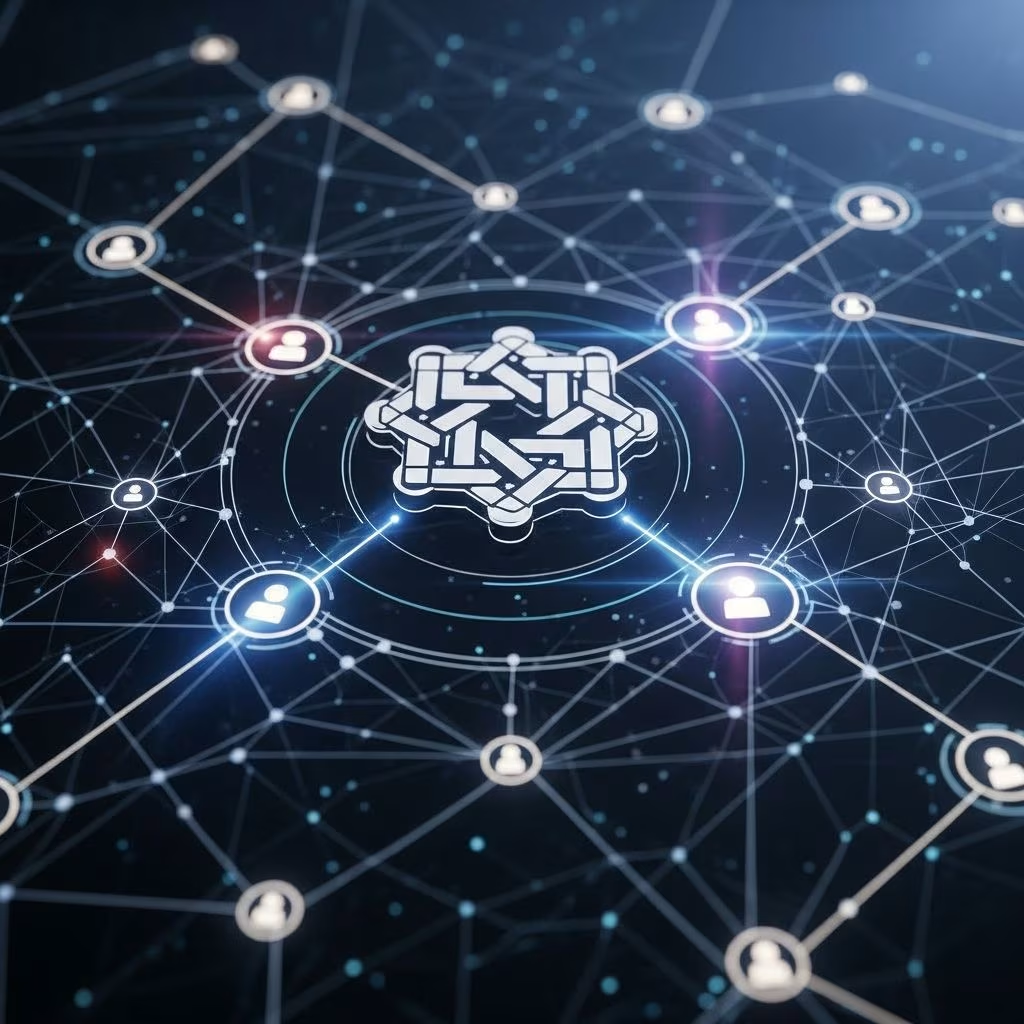
What is a DAO? Understanding Decentralized Autonomous Organizations
A Decentralized Autonomous Organization (DAO) represents a fundamentally new approach to organizational structure and governance in the digital age. A DAO is a blockchain-based organization governed by code and smart contracts rather than traditional centralized management. Unlike conventional companies with hierarchical structures and centralized leadership, DAOs operate as member-owned communities without a single authority figure making decisions. This innovative organizational model leverages blockchain technology to create transparent, democratic, and autonomous systems where stakeholders have direct control over organizational decisions and resource allocation.
The concept of DAOs addresses a persistent challenge known as the principal-agent dilemma, which exists whenever an individual or entity (the agent) has the ability to make decisions on behalf of another individual or entity (the principal). Traditional organizations are vulnerable to misaligned incentives, where managers or leaders might prioritize their own interests over those of shareholders or stakeholders. DAOs aim to solve this problem by encoding governance rules and incentive structures directly into smart contracts, ensuring that all participants work toward common organizational goals.
How DAOs Function: The Technical Framework
Understanding how DAOs operate requires knowledge of their core components and the phases they go through to become fully functional autonomous entities. The process involves several critical stages that establish the foundation for transparent and democratic governance.
Smart Contract Setup
The foundation of any DAO begins with smart contract creation. Smart contracts are self-executing programs deployed on blockchain networks that automatically enforce the rules encoded within them. Before a DAO can launch, developers must carefully define and encode the underlying governance rules, operational workflows, and incentive structures into these smart contracts. This phase is arguably the most crucial because any initial mistakes or overlooked details can potentially destabilize the entire project. Since future changes to the DAO’s operations will require voting by token holders to take effect, the initial smart contract design must be thoroughly considered and tested.
Funding and Token Distribution
Once the governing smart contracts are established, the DAO must receive funding to operate. This funding typically involves the creation and distribution of a native token that serves multiple purposes: it can be spent by the DAO, used in voting mechanisms, and employed to incentivize certain activities within the ecosystem. Individuals or entities interested in participating in the DAO’s growth can purchase or acquire the DAO’s native token, which typically grants voting rights proportional to the number of tokens held. The number of tokens a user holds directly represents their voting weight in governance decisions, meaning shareholders with more tokens have greater privileges for introducing new governance proposals.
Deployment and Autonomous Operation
Once a DAO receives sufficient funding, it can be deployed on the blockchain. At this point, all organizational decisions are made through consensus voting among token holders. Every token holder becomes a stakeholder with the ability to make proposals regarding the DAO’s future and how its funds are spent. If the DAO’s token distribution policy and consensus mechanisms are well-designed, stakeholders will naturally work toward outcomes that benefit the entire network. The resulting organization can operate independently of its creators or any other central authority, governed entirely by the rules encoded in its smart contracts.
Key Advantages of Decentralized Autonomous Organizations
DAOs offer several compelling advantages over traditional organizational structures, making them attractive to communities seeking more democratic and transparent governance models.
Enhanced Transparency and Accountability
One of the primary benefits of DAOs is the dramatically improved transparency compared to traditional companies. Since anyone can easily view all actions and funding decisions on the public blockchain, the transparency level is substantially higher than conventional organizations. In traditional publicly traded companies, stakeholders can only access audited financial statements that provide a snapshot of the organization’s financial health at specific points in time. In contrast, DAOs maintain their balance sheets on a public blockchain where every single transaction is recorded and can be reviewed at any time by any participant. This creates a permanent, verifiable audit trail that cannot be altered retroactively.
Reduced Corruption and Censorship Risk
The decentralized nature of DAOs significantly reduces the risk of censorship and corruption. Because decisions are made through consensus voting and encoded in immutable smart contracts, no single individual can unilaterally impose their will on the organization. This structural safeguard against corruption creates an environment where stakeholders can have greater confidence in the fairness and integrity of organizational processes.
Democratic Governance and Equal Participation
DAOs enable democratic governance where voting power is distributed among stakeholders based on their token holdings. The equal distribution of power reduces the possibility of the organization being flooded with unreasonable proposals, as significant changes typically require approval from a majority of stakeholders. Governance in a DAO depends on the shareholders, and all DAOs can establish unique rules regarding voting processes and what constitutes a majority consensus.
Automated and Efficient Operations
Smart contracts enable DAOs to automate many operational processes that would normally require manual intervention in traditional organizations. For example, a creative production DAO could automatically determine compensation for different roles—such as sound engineering, voice-overs, programming, and 3D modeling—based on predetermined rates established in the smart contract. This automation reduces overhead costs and eliminates the need for centralized administrative staff.
Challenges and Disadvantages of DAOs
While DAOs offer significant advantages, they also face substantial challenges that limit their adoption and effectiveness. Understanding these limitations is crucial for anyone considering participation in or creation of a DAO.
Legal and Regulatory Uncertainty
One of the most significant challenges facing DAOs is the unclear legal status of this organizational model. Securities regulators in various jurisdictions have scrutinized DAOs, with the U.S. Securities and Exchange Commission treating some DAO tokens as illegal offers of unregistered securities. Because DAOs operate outside traditional legal frameworks, they may not receive the same protections or recognition as conventional corporations. Known participants or those at the interface between a DAO and regulated financial systems may become targets of regulatory enforcement or civil actions if they fail to comply with applicable laws.
Security Vulnerabilities
DAOs are vulnerable to security threats, as demonstrated by historical incidents. The original DAO launched in 2016 as an Ethereum-based venture capital fund that amassed 3.6 million ether, then worth more than $70 million, before being hacked and drained of $50 million weeks after launch. Although the hack was reversed through a hard fork of the Ethereum blockchain, this incident highlighted the risks associated with smart contract vulnerabilities and the potentially devastating consequences of security exploits.
Governance Challenges
Managing governance in a DAO presents unique challenges. Token holders must have sufficient knowledge to make informed voting decisions, yet many participants may lack the technical expertise or time commitment required for effective governance. Additionally, DAOs can struggle with voter participation, potentially leading to decisions being made by a small subset of engaged stakeholders rather than the broader community.
Scalability and Technical Limitations
DAOs operate within the constraints of their underlying blockchain networks, which may have limitations regarding transaction speed, cost, and scalability. As DAOs grow and require more frequent transactions and voting events, they may encounter performance bottlenecks or prohibitive transaction costs.
Real-World Examples of Successful DAOs
Several DAOs have demonstrated the viability of this organizational model and achieved significant scale and impact in the blockchain ecosystem.
MakerDAO
MakerDAO is a decentralized lending network built on the Ethereum blockchain that serves as the protocol behind the stablecoin DAI. The MakerDAO Foundation initiated important amendments in April 2020 to achieve full decentralization, including transferring control of undistributed governance tokens (MKR) to MKR holders, establishing a process for electing paid contributors, and improving voter participation mechanisms to benefit smaller stakeholders. This evolution demonstrates how DAOs can transition from founder-led projects to fully community-governed organizations.
Curve DAO
Curve DAO is developing an Automated Market Maker (AMM) system that generates fees and enables revenue sharing for token holders who lock their tokens in the platform. The DAO setup ensures the distribution of voting privileges and revenue shares according to the duration of time token holders have been invested in the project. This structure aligns incentives by rewarding long-term commitment and participation.
The Creation Process: Building a DAO from Scratch
Creating a functional DAO requires a methodical approach that addresses governance, tokenomics, and deployment considerations.
Understanding the Governance Problem
The first step in creating a DAO involves developers understanding the specific governance problem they want to address and codify. This requires careful analysis of the organizational challenges that the DAO will solve and how blockchain technology and smart contracts can effectively address these issues.
Defining Tokenomics and Governance Model
In the second step, developers must define the tokenomics within the governance model, establishing monetization precedents and ensuring the right balance between rewards and penalties for malicious behavior. This involves determining how tokens will be distributed, what voting rights they confer, and how the DAO will incentivize positive contributions while discouraging harmful actions.
Launching with Balanced Power Distribution
The final step involves launching the DAO blockchain, typically with equal token stakes for developers as for remaining stakeholders. This approach prevents concerns about power imbalance at the outset. Over time, developers generally release their stakes in the network gradually, further decentralizing control.
Practical DAO Applications and Use Cases
DAOs demonstrate versatility across multiple sectors and use cases. A creative production organization could establish a DAO with specifications for funding rules, where developers set specific budget thresholds in the smart contract funding pool. Team members receive tokens for voting when included in the DAO, with team leaders typically receiving more tokens according to their roles and responsibilities. If team votes surpass the budget threshold, the vote automatically fails, allowing the team to determine ideal project scale within budget constraints. Additionally, DAOs enable novel governance actions previously difficult in traditional organizations, such as collectively removing executives from their positions or voting on bonus distributions.
Frequently Asked Questions About DAOs
Q: What is the primary difference between a DAO and a traditional company?
A: The primary difference is governance structure. DAOs are governed by smart contracts and community voting, while traditional companies typically have centralized management hierarchies. In a DAO, all stakeholders with tokens can participate in decision-making, whereas traditional companies have boards of directors and executives making decisions.
Q: Do I need technical knowledge to participate in a DAO?
A: While basic understanding of blockchain concepts is helpful, most DAOs provide user-friendly interfaces for token holders to vote and participate. However, understanding the proposals and their implications does require some effort and research.
Q: Are DAOs legal?
A: The legal status of DAOs remains unclear and varies by jurisdiction. Some regulatory bodies treat certain DAOs as unregistered securities offerings. It is advisable to consult with legal professionals regarding the specific jurisdiction and DAO structure.
Q: How do DAOs handle disputes or conflicts?
A: Dispute resolution mechanisms vary by DAO. Some employ arbitration through designated community members, while others use voting mechanisms to address conflicts. The specific process is defined in each DAO’s governing smart contracts.
Q: What blockchain networks support DAOs?
A: While Ethereum is the most popular platform for DAOs due to its smart contract capabilities, other blockchains like Polkadot, Cosmos, and Solana also support DAO creation and operation.
Q: How do DAO tokens gain value?
A: DAO tokens derive value from several sources: the organization’s success and revenue generation, scarcity of token supply, governance rights they confer, and market demand from investors seeking participation and influence in the DAO’s future.
The Future of Decentralized Organizations
DAOs represent an evolving organizational paradigm that challenges traditional corporate structures and governance models. As blockchain technology matures and regulatory frameworks clarify, DAOs will likely become increasingly prevalent across various industries. The fundamental principles of transparency, democratic participation, and aligned incentives that underpin DAOs address real limitations of conventional organizational structures. While challenges remain—particularly regarding legal status, security, and governance complexity—the continued development and refinement of DAO mechanisms suggest a significant role for decentralized autonomous organizations in the future of work, investment, and community coordination.
References
- Decentralized Autonomous Organization (DAO) Beginner’s Guide — 101 Blockchains. 2024. https://101blockchains.com/decentralized-autonomous-organization-dao/
- What is a DAO? Decentralized Autonomous Organization — Gemini Cryptopedia. 2024. https://www.gemini.com/cryptopedia/decentralized-autonomous-organization-dao
- Decentralized Autonomous Organization — Wikipedia. 2025. https://en.wikipedia.org/wiki/Decentralized_autonomous_organization
This article is general information, not personal financial advice. Consider your own situation, or speak with a licensed adviser, before acting on it.


