

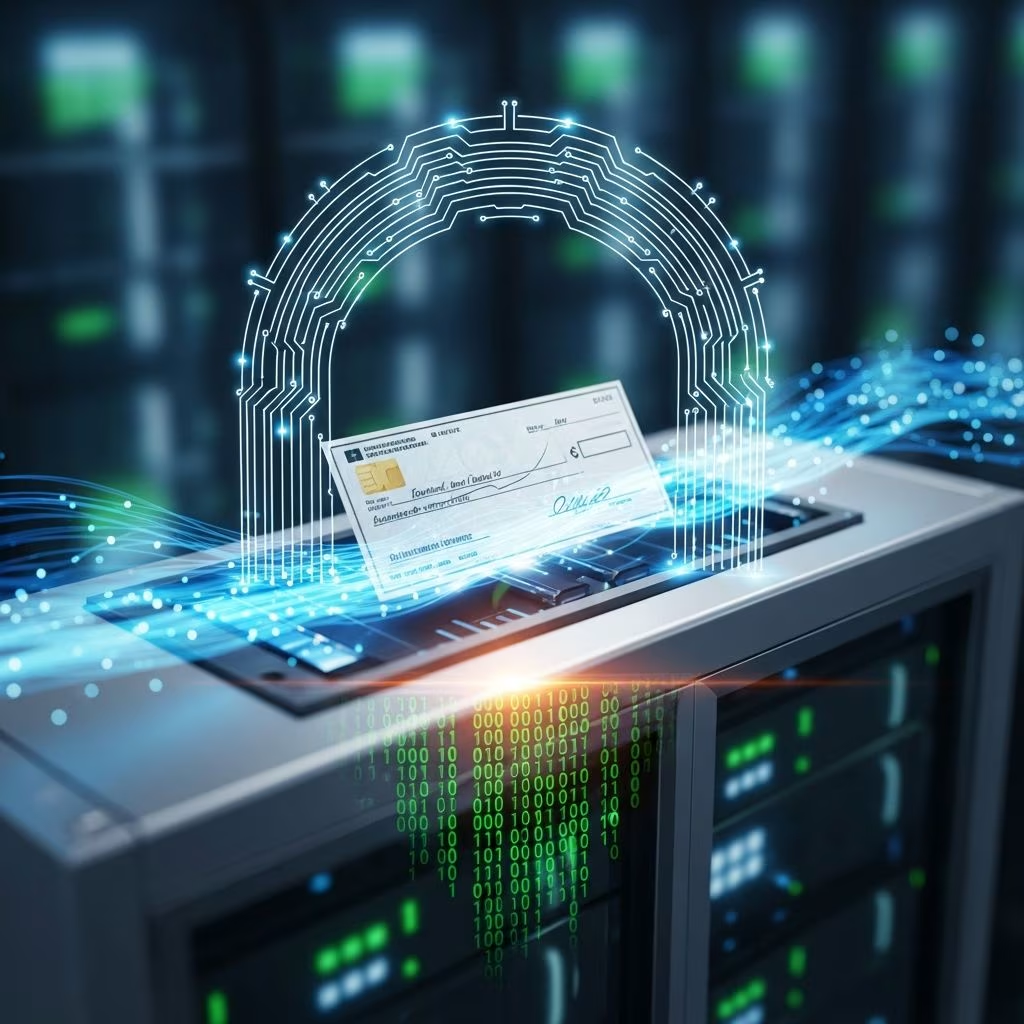
Electronic checks, commonly known as eChecks, represent a modern evolution in payment processing, enabling seamless fund transfers between bank accounts without the need for physical paper. These digital transactions leverage established financial networks to provide efficiency and reliability for both individuals and businesses.
The Fundamentals of eCheck Technology
At its core, an eCheck functions as an electronic replica of a traditional paper check. Instead of ink on paper, payers input essential banking details—such as account and routing numbers—into a secure online form or payment portal. This authorizes the withdrawal of specified funds from the payer’s checking account and their deposit into the recipient’s account.
The backbone of this system is the Automated Clearing House (ACH) network, a secure electronic infrastructure operated by financial institutions across the United States. ACH processes billions of transactions annually, handling everything from payroll to bill payments with standardized protocols that ensure accuracy and fraud prevention.
- Key Components: Payer’s bank details, payee information, transaction amount, and explicit authorization.
- Network Role: ACH acts as the intermediary, verifying funds availability and facilitating the transfer.
- Digital Signatures: Many platforms incorporate encryption and authentication to mimic the security of signed paper checks.
Step-by-Step: How eChecks Are Processed
Understanding the workflow demystifies eChecks and highlights their streamlined nature. The process typically unfolds in four main phases, from initiation to settlement.
- Initiation: The payer provides banking information via an online form, phone verification, or integrated app. Authorization is captured digitally, often through terms acceptance or a recorded consent.
- Submission: The payee’s payment processor submits the eCheck to the ACH network, including all necessary details for validation.
- Verification and Clearing: ACH checks for sufficient funds, authenticates the transaction, and routes it between banks. This step includes risk assessments to flag potential issues.
- Settlement: Funds are debited from the payer and credited to the payee, usually within 1-3 business days. Notifications confirm completion to both parties.
This sequence mirrors paper check handling but eliminates physical transport, reducing delays and errors.
Advantages Driving eCheck Adoption
eChecks have gained traction due to tangible benefits over legacy methods. Businesses appreciate the cost savings—often pennies per transaction versus dollars for cards—while consumers value the familiarity of check-like payments without mailing hassles.
| Benefit | Description | Impact |
|---|---|---|
| Cost Efficiency | Fees as low as $0.25-$1.50 per transaction | Ideal for high-volume billing |
| Speed | Clears in 1-3 days vs. 5-7 for paper | Faster cash flow for recipients |
| Security | Encryption, digital signatures, fraud monitoring | Lower risk than mailed checks |
| Convenience | No need for checks, stamps, or trips to the bank | Supports remote and recurring payments |
| Eco-Friendly | Reduces paper waste | Aligns with digital transformation |
Statistics underscore this shift: ACH volume grew over 10% annually, with eChecks comprising a significant portion for B2B and consumer payments.
Navigating Risks and Protective Measures
While robust, eChecks aren’t impervious to challenges. Common risks include insufficient funds, resulting in NSF fees, or unauthorized debits if credentials are compromised. Processing delays can occur during high-volume periods or holidays.
- Fraud Prevention: Use only trusted processors with NACHA compliance (the ACH governing body).
- Authorization Best Practices: Require written or recorded consents; avoid sharing details verbally without verification.
- Dispute Resolution: ACH rules allow returns within 60 days for errors, protecting payers.
- Merchant Tips: Verify payer identity via micro-deposits or plaid-like services before large transactions.
Regulatory oversight by the Federal Reserve and NACHA ensures standardized protections, making eChecks safer than unsecured alternatives.
eChecks vs. Other Payment Methods: A Comparative Analysis
To choose wisely, compare eChecks against peers. While versatile, they suit specific scenarios best.
| Method | Processing Time | Cost | Acceptance | Use Cases |
|---|---|---|---|---|
| eCheck/ACH | 1-3 days | Low ($0.25-$1.50) | Businesses, bills | Recurring, B2B |
| Credit/Debit Card | Instant | 2-4% fees | Widespread | Retail, e-commerce |
| Wire Transfer | Same day | $15-$50 | Large sums | International, urgent |
| Paper Check | 5-10 days | $1-$3 + postage | Traditional | Rare, personal |
eChecks excel in cost-sensitive, non-urgent transfers, bridging digital convenience with banking reliability.
Real-World Applications Across Industries
From rent collection to supplier payments, eChecks permeate diverse sectors. Landlords use them for automated tenant billing, reducing late payments by 30-50%. Non-profits leverage low fees for donations, maximizing funds for causes.
In healthcare, eChecks streamline insurance reimbursements. E-commerce platforms integrate them for high-ticket items where card fees erode margins. Even government agencies employ ACH for benefits like Social Security direct deposits, a form of batch eCheck processing.
Setting Up eChecks: Practical Guidance
Getting started is straightforward. Businesses need an ACH merchant account from providers like their bank or gateways (e.g., Stripe, QuickBooks). Consumers can initiate via payee portals or banking apps.
- Select a compliant processor.
- Integrate payment forms on websites or invoices.
- Collect authorizations securely.
- Monitor transactions via dashboards.
- Handle returns promptly.
For payers, simply enter details when prompted—no special setup required beyond a checking account.
Future Trends in eCheck Evolution
Advancements like same-day ACH and real-time payments (RTP) are accelerating eCheck timelines. Integration with mobile wallets and AI fraud detection promises even greater adoption. By 2026, projections indicate ACH volumes exceeding 30 billion transactions yearly, fueled by eCheck growth.
Blockchain pilots explore hybrid models for cross-border eChecks, potentially disrupting wires. Regulatory pushes for open banking will further embed eChecks in everyday finance.
Frequently Asked Questions (FAQs)
What banks support eChecks?
Nearly all U.S. banks participate in ACH, making eChecks universally accessible.
Are eChecks reversible?
Yes, within 60 days for disputes like unauthorized charges or errors.
How secure are eChecks compared to cards?
Highly secure with encryption; lower fraud rates due to direct bank pulls.
Can I use eChecks internationally?
Primarily domestic; international equivalents exist via SWIFT or local ACH.
What if funds are insufficient?
Transactions return as NSF, incurring fees for payer and merchant.
eChecks continue transforming payments by combining tradition with technology, offering a balanced path forward in digital finance.
References
- Electronic Check – Definition & How e-Checks Work — Corporate Finance Institute. 2023. https://corporatefinanceinstitute.com/resources/wealth-management/electronic-check/
- eChecks: Guide to Understanding How Electronic Checks Work — PaySimple. 2024-05-15. https://paysimple.com/blog/how-do-echecks-work/
- Electronic Check (E-Check): What It Is and How It Works — SoFi. 2025-01-10. https://www.sofi.com/learn/content/what-is-an-electronic-check-e-check/
- What Is an ACH eCheck? A Look at Electronic Check Payments — Core Business Technologies. 2024. https://www.corebt.com/glossary/ach-echeck/
- eChecks: What It Is, How It Works, & How Long It Takes — Ramp. 2025-02-01. https://ramp.com/blog/what-are-echecks
- What is an electronic check (eCheck) and how does it work? — Bankrate. 2025-11-20. https://www.bankrate.com/banking/what-is-an-echeck/
This article is general information, not personal financial advice. Consider your own situation, or speak with a licensed adviser, before acting on it.


