

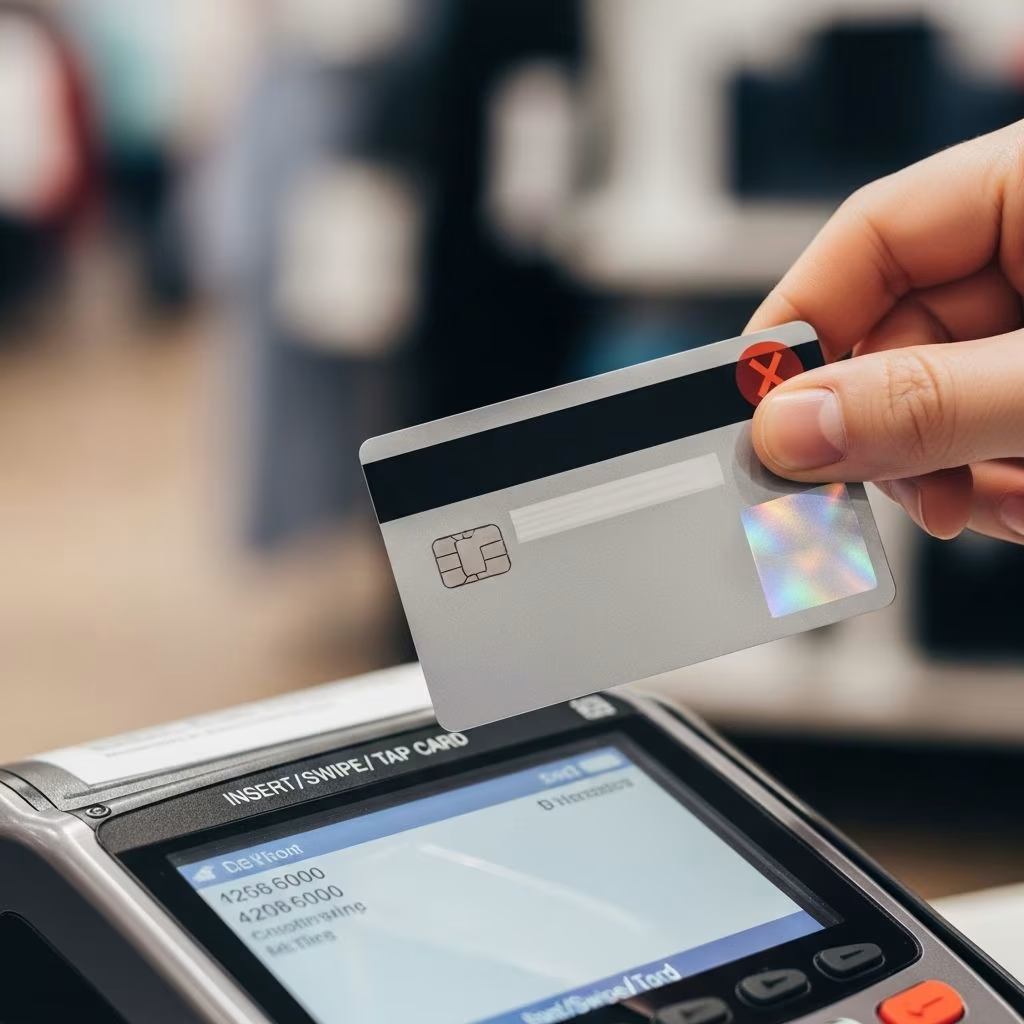
Credit cards offer enticing rewards programs, but not every transaction qualifies for points, miles, or cash back. Certain purchases fall into excluded categories due to high risk, processing costs, or issuer policies, preventing users from earning benefits on them.
Why Rewards Programs Have Exclusions
Credit card issuers design rewards to encourage everyday spending while protecting against abuse. Exclusions typically target transactions with elevated fraud risk or those resembling cash equivalents, which bypass merchant processing networks. These rules ensure program sustainability and align incentives with profitable consumer behaviors.
Understanding these limitations helps cardholders direct spending toward qualifying purchases, optimizing overall returns. For instance, while groceries and gas often yield high rewards, other common expenses yield nothing.
Cash-Like Transactions: The Primary Offenders
Cash equivalents top the list of non-rewarding purchases because they mimic direct cash access without merchant involvement. Issuers view them as high-risk for money laundering or debt cycling.
- Cash Advances: Withdrawing cash from ATMs or banks using your card incurs immediate fees and interest without rewards. These transactions post as cash advances, bypassing rewards entirely.
- Balance Transfers: Moving debt from one card to another rarely earns points, as they fund repayments rather than new purchases. Promotional rates apply, but no bonuses accrue.
- Convenience Checks: Mailed checks from issuers for cash or transfers function like advances, earning zero rewards despite card branding.
These differ from standard purchases by settling outside retail networks, triggering exclusion rules universally across major issuers.
Financial Services and Fees That Don’t Count
Payments for money services or fees often exclude rewards to deter abuse and cover processing variances. Businesses in these sectors may code transactions to avoid rewards liability.
- Money Orders and Wire Transfers: Buying money orders or wiring funds through your card treats the transaction as cash-like, forfeiting points.
- Traveler’s Checks: Purchasing these for travel provides no rewards, similar to cash advances.
- Betting and Gambling: Casino chips, lottery tickets, or online wagers frequently code as non-qualifying due to regulatory and risk factors.
- Student Loan Payments: Direct payments to lenders via card often incur surcharges and exclude rewards, as they process like person-to-person transfers.
Table comparing common financial transactions:
| Transaction Type | Rewards Eligible? | Typical Reason | Alternative |
|---|---|---|---|
| Cash Advance | No | Cash equivalent | Use debit card |
| Money Order | No | High fraud risk | Bank account transfer |
| Gambling | No | Regulatory exclusion | Cash or debit |
| Wire Transfer | No | Non-merchant | ACH from bank |
Business and Government Payments Excluded
Transactions with governments or select businesses often skip rewards due to merchant category codes (MCC) that issuers flag. These include taxes, utilities, or professional services where surcharges apply.
- Tax Payments: IRS or state tax filings via card rarely earn rewards, though some processors allow it with fees offsetting potential gains.
- Utility Bills: Electricity, water, or phone payments sometimes qualify if paid through merchants, but direct agency payments do not.
- Medical and Legal Fees: Doctor visits or attorney payments may exclude rewards based on MCC, varying by provider coding.
Pro tip: Review your card’s terms for MCC lists; some issuers reward government spending selectively.
Quasi-Cash and High-Risk Merchant Categories
Merchants dealing in stored value or high-risk items trigger exclusions. These protect against fraud in card-not-present (CNP) environments.
- Gift Cards from Non-Retail: Buying Visa gift cards or prepaid cards often codes as quasi-cash, denying rewards.
- Cryptocurrency Purchases: Exchanges treat card buys as high-risk, excluding points amid volatility concerns.
- Adult Entertainment: Certain venues code to prevent rewards on discretionary spending.
CNP transactions, common online, carry higher exclusion risks due to fraud potential compared to card-present swipes.
Interest Charges and Overlimit Fees
Non-purchase charges like interest or fees never earn rewards, as they aren’t sales. Carrying a balance triggers interest posts without points, reinforcing pay-in-full habits for optimal rewards.
Strategies to Maximize Rewards Despite Exclusions
Avoiding pitfalls requires planning. Focus spending on bonus categories like travel or dining, which yield 2-5x points.
- Route utilities through rewards portals if eligible.
- Use debit for cash needs to preserve credit limits.
- Monitor statements for miscoded purchases and dispute.
- Pair cards: Use everyday cards for exclusions, rewards cards elsewhere.
Leverage sign-up bonuses and quarterly categories to offset non-earning spends. Tools like expense trackers categorize transactions preemptively.
Comparing Rewards Across Popular Cards
Not all cards exclude identically; premium cards may reward more categories.
| Card Type | Common Exclusions | Bonus Categories |
|---|---|---|
| Cash Back | Cash advances, fees | Groceries, gas |
| Travel Rewards | Taxes, crypto | Airfare, hotels |
| Business Cards | Balance transfers | Office supplies, ads |
Frequently Asked Questions
Do balance transfers ever earn rewards?
Rarely; most issuers exclude them explicitly in terms. Check your card agreement for exceptions during promotions.
Why don’t tax payments qualify for points?
Government payments use MCCs that issuers flag to avoid subsidizing non-retail spends.
Can I earn rewards on gift cards?
Retail gift cards (e.g., store-specific) usually qualify; generic prepaid cards do not, as quasi-cash.
What about Venmo or PayPal payments?
Person-to-person via apps often excludes rewards, coding as cash equivalents.
How do I know if a purchase qualifies?
Review issuer terms and past statements; rewards post based on merchant codes.
Navigating Evolving Rewards Landscapes
As digital payments grow, issuers adjust exclusions. Real-time payments and BNPL may introduce new categories, but cash-like rules persist. Stay informed via issuer updates.
Digital wallets integrate cards but inherit exclusions; scan for fees in e-wallets.
References
- Types of Non-Cash Payment Instruments and Their Benefits — Jasuindo. 2025-04-24. https://jasuindo.com/2025/04/24/types-of-non-cash-payment-instruments-and-their-benefits/
- Non-Cash Payment Instruments: Definition, Types, and Benefits — BRI Developers. N/A. https://developers.bri.co.id/en/news/non-cash-payment-instruments-definition-types-and-benefits
- Understanding Types of Payment Methods — Financial Professionals. N/A. https://www.financialprofessionals.org/training-resources/resources/articles/Details/understanding-types-of-payment-methods
- Top 10 Types of Payment Methods — Native Teams. N/A. https://nativeteams.com/blog/top-10-payment-methods
- Card-present vs. card-not-present transactions — Stripe. N/A. https://stripe.com/resources/more/card-present-vs-card-not-present-transactions
- Instant Payments Learning & Resources — FedNow Explorer. N/A. https://explore.fednow.org/resources?id=61
This article is general information, not personal financial advice. Consider your own situation, or speak with a licensed adviser, before acting on it.


