

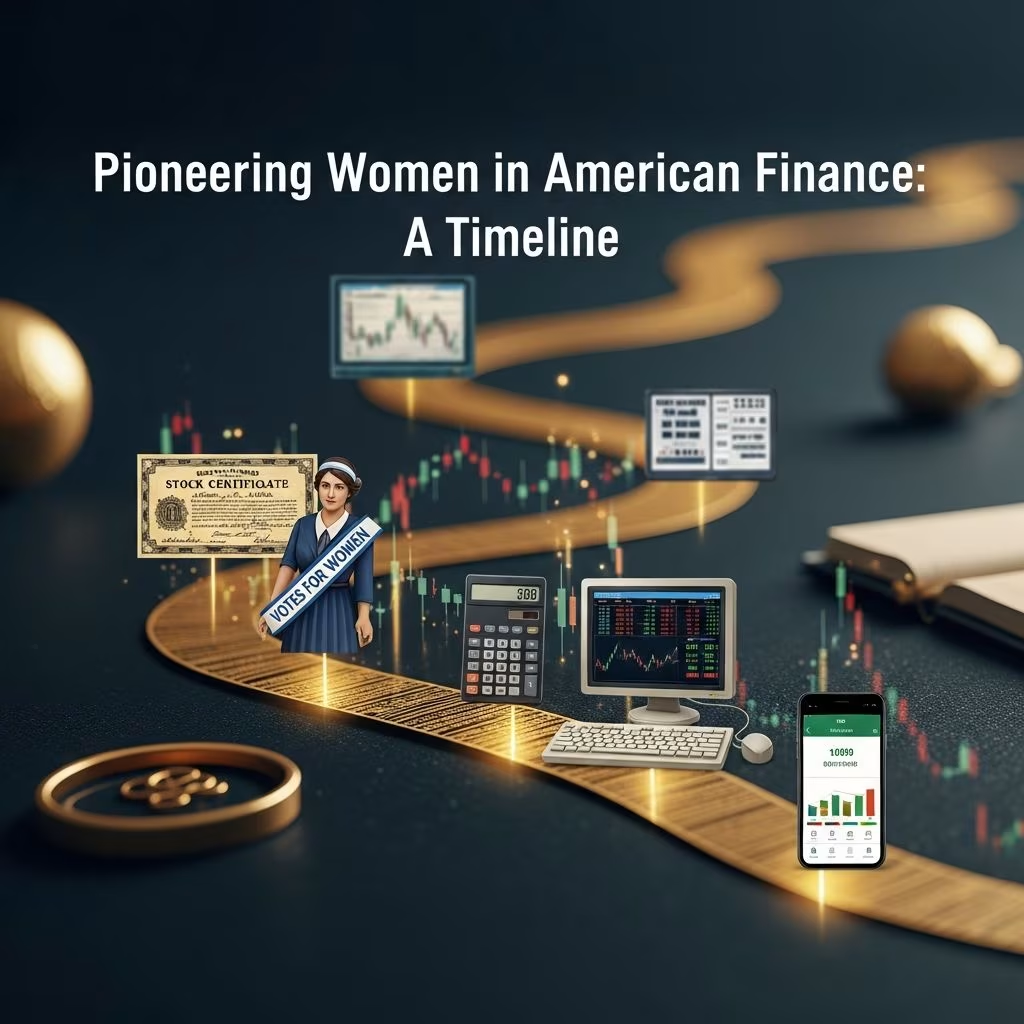
American women’s journey toward financial independence spans centuries of innovation, advocacy, and legislative breakthroughs. From colonial investors to modern regulators, these trailblazers challenged norms, built empires, and secured rights that benefit generations. This article chronicles key milestones, highlighting how determination and strategy transformed societal constraints into opportunities for wealth creation.
Colonial Foundations: Early Investments and Influence
In the 1700s and early 1800s, women navigated limited legal frameworks to participate in the emerging U.S. economy. Despite coverture laws subsuming married women’s assets under their husbands, savvy individuals invested in securities and land, laying groundwork for future gains.
- Abigail Adams as America’s First Female Investor: Wife of President John Adams, she managed family finances during the Revolutionary War, investing in government bonds and farmland rentals. Her bold moves yielded profits and demonstrated women’s financial acumen.
- Women in Early Public Finance: Females comprised 61% of investors in the 1759-60 Pennsylvania Indian Commission Loan and 11% of stockholders in the Insurance Company of North America by 1799, showing active roles in nation-building capital.
These efforts proved women could drive economic growth, even amid domestic expectations.
19th Century Breakthroughs: Property Rights and Industrial Leadership
The 1800s saw pivotal shifts as states enacted laws granting women property control, spurring entrepreneurship and labor organizing.
| Year | Milestone | Impact |
|---|---|---|
| 1809 | Mary Kies patents straw-weaving method for hats | Sparked New England manufacturing boom; first U.S. woman patent holder |
| 1825 | Rebecca Lukens leads Brandywine Iron Works | First woman industrial CEO; turned debt into Fortune 500 precursor |
| 1839 | Mississippi’s Married Women’s Property Act | Ended coverture in key areas; inspired nationwide reforms for ownership |
| 1862 | Homestead Act allows women land claims | Enabled single women to own property, fostering self-reliance |
Rebecca Lukens exemplified industrial foresight, steering her company through economic panics. Meanwhile, Mary Ellen Pleasant leveraged San Francisco’s Gold Rush to build wealth via investments and abolitionist funding, often passing as white to amplify influence.
Labor Unions and Wall Street Entrants: Mid-1800s Momentum
Women entered finance directly, forming unions and brokerages amid rising activism.
- 1869: Daughters of St. Crispin Union: First national women’s labor group demanded equal pay, striking across states and lobbying Congress.
- 1869: Lydia Moss Bradley’s Prenup: Pioneered asset protection via prenuptial agreement, later funding education.
- 1870: Woodhull Sisters’ Brokerage: Victoria and Tennessee Claflin opened Wall Street’s first women-led firm, serving female clients and funding suffrage.
Victoria Woodhull’s 1872 presidential run underscored finance’s role in political power.
Early 20th Century Empires: Black Women Bankers and Beauty Moguls
African American women built institutions amid segregation, creating jobs and capital access.
- 1903: Maggie Lena Walker’s St. Luke Bank: First woman-chartered U.S. bank served Black communities in Richmond.
- 1910s: Malone and Walker Cosmetics Dynasties: Annie Turnbo Malone’s Poro College and Madam C.J. Walker’s manufacturing employed thousands, making them self-made millionaires.
Madam C.J. Walker became America’s first female self-made millionaire, blending business with philanthropy.
New Deal and Post-War Reforms: Policy Powerhouses
The 20th century brought federal roles and labor protections.
| Year | Event | Key Figure/Law |
|---|---|---|
| 1933 | First female Cabinet member | Frances Perkins shapes Social Security, Fair Labor Standards Act |
| 1938 | Federal minimum wage | Reduces hourly pay gaps |
| 1963 | Equal Pay Act | Bans wage discrimination by gender |
Perkins’ New Deal architecture protected workers, including women.
Wall Street Warriors and Credit Revolutions: 1960s-1970s
Late-century laws and individuals shattered barriers.
- 1960s: Bank Accounts for Women: Ended spousal co-signature requirements.
- 1967: Muriel Siebert’s NYSE Seat: First woman among 1,365 men; founded discount brokerage.
- 1974: Equal Credit Opportunity Act: Prohibits sex-based credit denial; Rep. Lindy Boggs added provisions.
Siebert’s firm pioneered accessible trading.
Modern Legacy: Ongoing Progress and Challenges
Today’s women hold 10% of Fortune 500 CEO roles, but gaps persist in pay and assets. Recent data shows women control $10 trillion in U.S. investable assets, driving demand for tailored advice. Legislative wins like the 19th Amendment (1920) enabled voting on economic policies.
Financial literacy programs now echo pioneers, empowering via education like the 1862 Morrill Act’s land-grant colleges.
Key Lessons from Financial Trailblazers
- Diversify Boldly: Like Abigail Adams, balance safe rentals with high-yield bonds.
- Leverage Networks: Pleasant and Walker built communities for mutual gain.
- Advocate Legally: Unions and acts show collective action’s power.
- Innovate Relentlessly: Patents and brokerages created lasting wealth.
Frequently Asked Questions (FAQs)
Who was the first woman to own a Wall Street brokerage?
Victoria Woodhull and Tennessee Claflin in 1870, targeting female investors.
What did the Equal Credit Opportunity Act achieve?
It banned discrimination in credit based on sex or marital status in 1974.
How did the Homestead Act help women?
Allowed unmarried women to claim federal land in 1862, promoting independence.
Who is considered America’s first self-made female millionaire?
Madam C.J. Walker through her hair care empire in the 1910s.
Why were Married Women’s Property Acts significant?
They overturned coverture, letting women own property from 1839 onward.
References
- Women, Money, and Power: A Historical Timeline — The Helm. 2023. https://thehelm.co/women-money-power-timeline/
- Empowering Women: A Timeline of Historical Events in Women’s Financial History — Liz Windisch. 2023. https://lizwindisch.com/empowering-women-a-timeline-of-historical-events-in-womens-financial-history/
- 7 Dates in Financial History that Changed the Future for Women — HerMoney. 2023. https://hermoney.com/connect/7-dates-in-financial-history-that-changed-the-future-for-women/
- The History of Women and Money in the United States — One Advisory Partners. 2023. https://www.oneadvisorypartners.com/blog/the-history-of-women-and-money-in-the-united-states-in-honor-of-womens-history-month
- Tracing the Roots of Women on Wall Street — National Women’s History Museum. 2023. https://www.womenshistory.org/articles/tracing-roots-women-wall-street
- A Timeline of Women’s Fight for Financial Rights in the U.S. — Accredited Debt Relief. 2023. https://www.accrediteddebtrelief.com/blog/a-timeline-of-womens-fight-for-financial-rights-in-the-u-s/
- Women in Financial History: A Timeline — Rock the Street Wall Street. 2023. https://rockthestreetwallstreet.com/women-in-financial-history-a-timeline/
This article is general information, not personal financial advice. Consider your own situation, or speak with a licensed adviser, before acting on it.


