

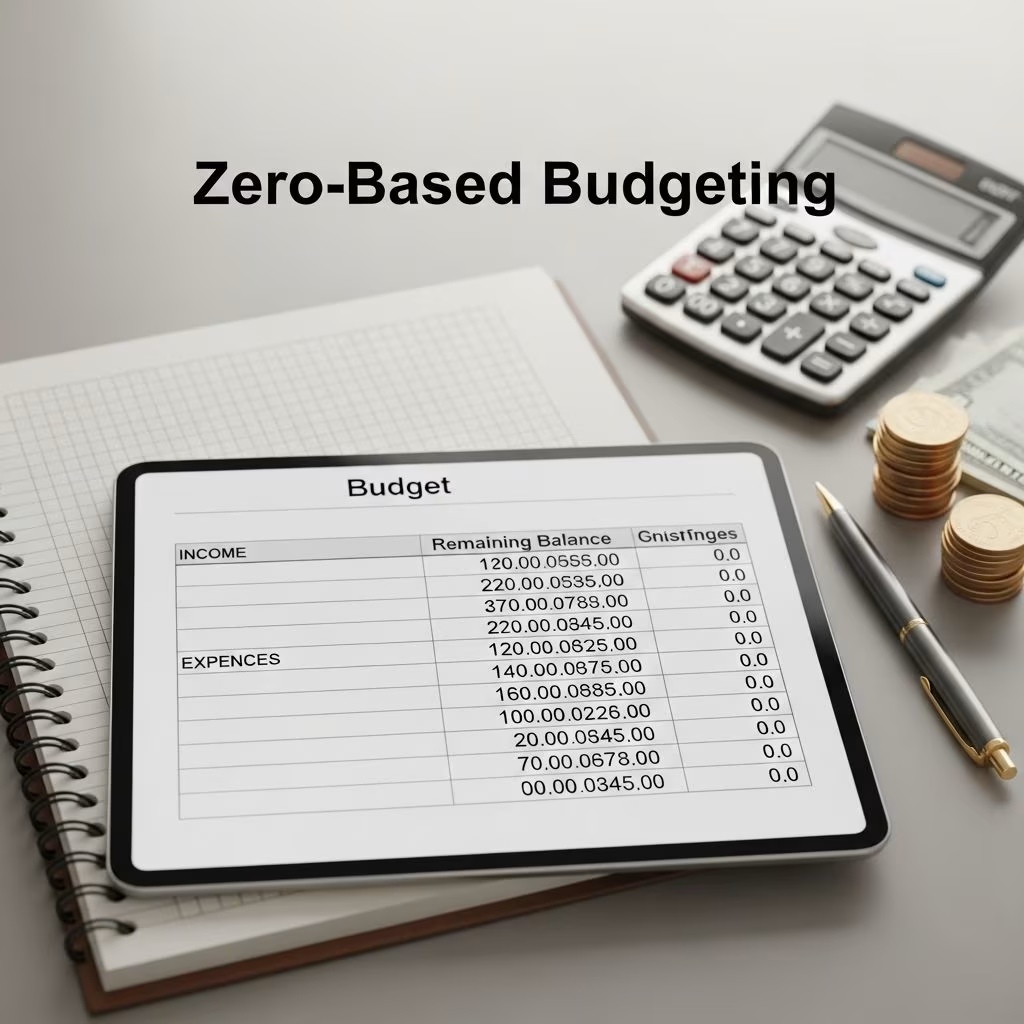
Zero-based budgeting empowers individuals to direct every cent of their income toward specific needs, savings, or debt repayment, ensuring no money goes unused at the end of the period.
Understanding the Core Principles
This approach differs from traditional methods by rejecting last period’s figures as a baseline. Instead, it demands fresh evaluation each time, tying allocations to current priorities.
At its heart, the method guarantees that income minus outflows equals zero, fostering intentionality in financial decisions.
Why Adopt This Budgeting Strategy?
People turn to this technique amid rising costs or shifting life stages, as it uncovers hidden waste and aligns spending with aspirations like homeownership or retirement.
- Reveals overlooked subscriptions or redundant costs.
- Boosts savings discipline by earmarking funds upfront.
- Supports debt elimination through targeted payments.
Step-by-Step Implementation Process
Begin by calculating total take-home pay. List all necessities first, then wants, followed by financial targets.
- Assess income: Sum all reliable sources monthly.
- Categorize outflows: Divide into essentials (rent, food), discretionary (dining out), savings, and debt.
- Justify each item: Ask if it serves a current goal; cut if not.
- Allocate fully: Adjust until totals match income precisely.
- Track daily: Use apps or spreadsheets to monitor adherence.
- Review end-month: Rollover surpluses to next period’s priorities.
This cycle repeats monthly, adapting to changes like raises or emergencies.
Key Advantages for Everyday Users
The method excels in promoting transparency, as every expense requires rationale, often slashing unnecessary outlays.
| Aspect | Zero-Based Approach | Traditional Budgeting |
|---|---|---|
| Flexibility | Adapts to new priorities dynamically | Relies on prior patterns rigidly |
| Cost Oversight | Eliminates waste through scrutiny | May perpetuate unchecked hikes |
| Goal Focus | Directs funds to strategic aims | Often overlooks long-term plans |
Real-Life Applications Across Scenarios
For households, it streamlines grocery planning by justifying bulk buys only if savings materialize.
Freelancers benefit by matching variable income to fixed costs first, buffering irregular earnings.
In business contexts, firms apply it to trim operational fat, like reevaluating vendor contracts annually.
Overcoming Common Hurdles
Initial setup demands time, potentially 5-10 hours monthly, but tools automate tracking over time.
It may feel limiting for spontaneous spenders; counter this by building small fun funds.
- Start small: Pilot with discretionary categories.
- Leverage software: Apps categorize spends automatically.
- Pair with accountability: Share plans with partners.
Tools and Resources to Simplify
Spreadsheets offer customization; apps like those for expense logging provide real-time balances.
Free templates abound online, with formulas auto-adjusting as inputs change.
Measuring Success Metrics
Track progress via reduced credit balances, growing emergency pots, or hitting savings milestones.
After three months, expect 10-20% more efficiency in resource use, per practitioner reports.
Frequently Asked Questions
What exactly is zero-based budgeting?
It requires justifying all expenses from scratch each period, ensuring income fully assigns without leftovers.
Is it suitable for beginners?
Yes, though start simply; it builds habits faster than lax methods.
How does it handle irregular income?
Base on lowest expected earnings, assigning extras to buffers or accelerators.
Can businesses use it too?
Absolutely; it aligns departments to goals, cutting legacy costs.
What if I overspend a category?
Reallocate from others or under-spends; review causes monthly.
Long-Term Financial Transformation
Consistent use cultivates mindset shifts, prioritizing value over impulse.
Users report sustained debt drops and wealth accumulation, as habits compound.
Integrate with goal-setting frameworks for amplified results, like automating transfers post-allocation.
References
- What Is Zero-Based Budgeting? — Workday. 2023. https://www.workday.com/en-ch/topics/fpa/what-is-zero-based-budgeting.html
- Zero-based budgeting: pros and cons — Prophix. 2023. https://www.prophix.com/blog/zero-based-budgeting-pros-and-cons/
- Zero-Based Budgeting — The Hackett Group. 2023. https://www.thehackettgroup.com/zero-based-budgeting-hackett/
- 10 Advantages and Disadvantages of Zero-Based Budgeting — Paro. 2023. https://paro.ai/blog/advantages-disadvantages-zero-based-budgeting/
- Zero-Based Budgeting: What Is It, Steps, and Key Advantages — PocketGuard. 2023. https://pocketguard.com/blog/zero-based-budgeting-what-is-it-steps-and-key-advantages/
- What is Zero Based Budgeting? — Kepion. 2023. https://www.kepion.com/blog/what-is-zero-based-budgeting
- Zero-Based Budgeting — Governor’s Office of Planning and Budget, Georgia. 2023. https://opb.georgia.gov/budget-information/budget-documents/zero-based-budgeting
This article is general information, not personal financial advice. Consider your own situation, or speak with a licensed adviser, before acting on it.


