

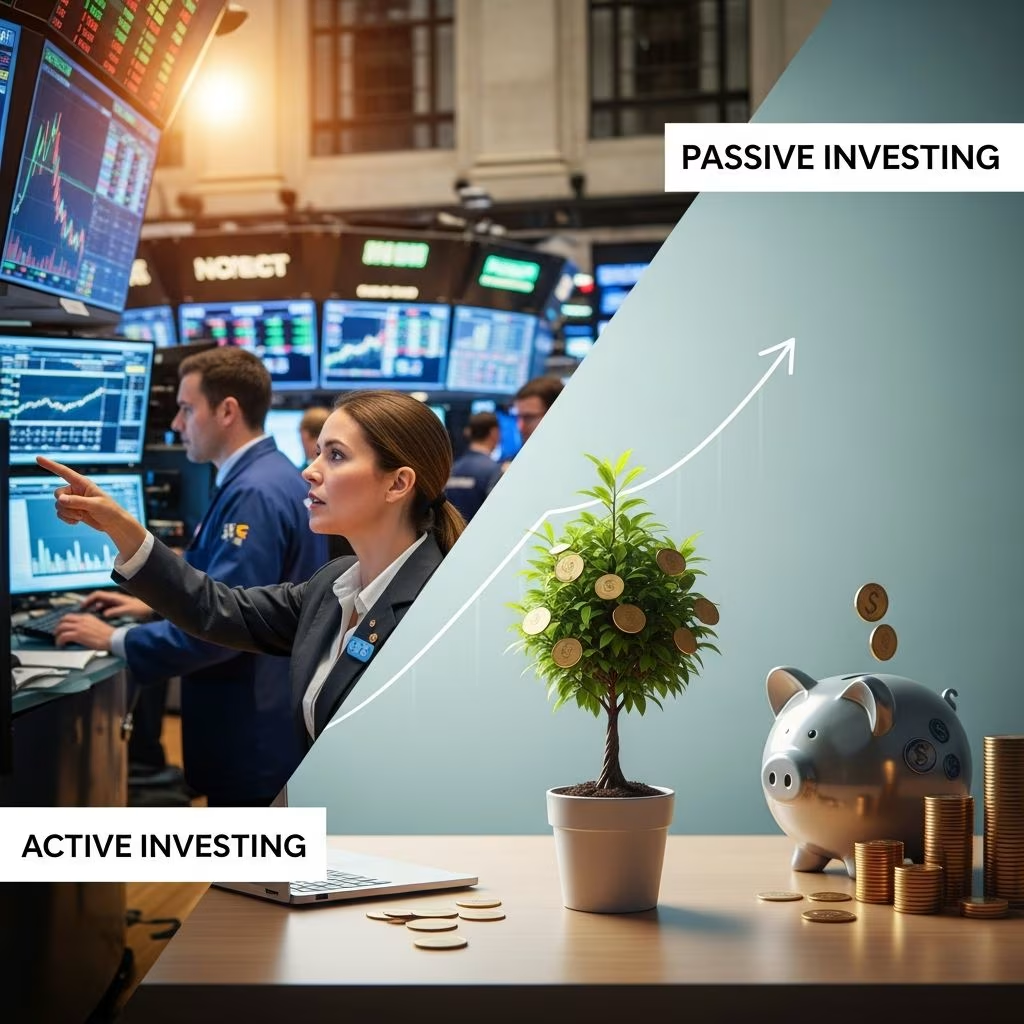
Active vs. Passive Investing: Understanding the Fundamental Differences
When it comes to building wealth through investments, two primary strategies dominate the financial landscape: active investing and passive investing. Both approaches share a common objective—growing your wealth over time—but they achieve this goal through distinctly different methods and philosophies. Understanding the key differences between these strategies is essential for making informed investment decisions that align with your financial goals, risk tolerance, and lifestyle.
Active investing takes a hands-on approach to portfolio management, requiring frequent decision-making and close monitoring of your investments. In contrast, passive investing employs a more laid-back strategy, focusing on long-term growth by mirroring a specific market index or asset class. The choice between these two approaches can significantly impact your investment returns, expenses, and overall financial success.
What is Active Investing?
Active investing is a dynamic investment strategy where managers or individual investors actively buy and sell securities in an effort to outperform the market or a specific benchmark. This approach requires extensive research, analysis, and judgment to identify investment opportunities that can generate returns exceeding the market average.
Active investors conduct thorough research on companies and market conditions, making frequent trades based on their analysis of where prices are headed. Many active investors work closely with financial advisors or employ professional fund managers who dedicate significant time to selecting individual stocks or bonds they believe will outperform the market. This strategy appeals to investors who want to take a proactive role in managing their portfolios and believe they can achieve superior returns through skillful decision-making.
Active funds typically include traditional mutual funds and some exchange-traded funds (ETFs) that employ professional managers to make investment decisions on behalf of shareholders. These managers continuously monitor market conditions and adjust portfolio holdings accordingly.
What is Passive Investing?
Passive investing is a more hands-off investment approach that seeks to match the performance of a specific market index or benchmark rather than attempting to beat it. Passive investors buy a basket of securities that replicate a market index and maintain those positions with minimal trading activity.
Instead of trying to outperform the market, passive investors accept market returns and focus on long-term wealth accumulation. This strategy typically involves investing in index funds or passively managed ETFs that track well-known indices such as the Standard & Poor’s 500 index. Passive investors believe that trying to consistently beat the market is difficult and that the costs associated with frequent trading often outweigh any potential gains.
Passive investing requires a long-term mindset that accepts daily market fluctuations without attempting to time the market or react to short-term volatility. The philosophy behind passive investing is based on the efficient market hypothesis—the idea that market prices already incorporate all available information, making it difficult to consistently identify undervalued securities.
Key Differences Between Active and Passive Investing
Understanding the fundamental differences between active and passive investing will help you determine which strategy aligns with your financial objectives and personal circumstances.
Management Style and Approach
The most significant difference between these strategies lies in their management style. Active investing involves professional fund managers or individual investors making regular decisions about which securities to buy and sell. Passive investing, by contrast, follows a predetermined market index with minimal human intervention beyond the initial fund structure setup.
Investment Goals
Active managers aim to outperform their benchmark index, striving to generate returns higher than the market average. Passive managers, however, simply aim to mirror—not beat—the performance of a specific market index. This fundamental difference in objectives shapes every other aspect of these investment strategies.
Trading Frequency and Portfolio Activity
Active investing involves frequent buying and selling of securities based on market analysis and changing conditions. Passive investors buy and hold a static portfolio of index components, dramatically reducing transaction frequency and portfolio turnover. This difference directly impacts both costs and tax efficiency.
Cost Structure
One of the most important distinctions between active and passive investing is cost. Active funds usually have higher fees due to their hands-on management approach, professional expertise, and frequent trading activities. Passive funds generally have lower fees because they require less active management and rely on automated systems to track indices. These lower expense ratios can significantly enhance long-term returns for passive investors.
Active Investing: Advantages and Disadvantages
Advantages of Active Investing
- Potential for Higher Returns: Active managers aim to beat market averages, potentially leading to greater profits when their strategies succeed.
- Flexibility and Adaptability: Active managers can adjust their portfolio in response to market changes, emerging opportunities, or changing economic conditions. This flexibility allows them to potentially capitalize on market inefficiencies and mispriced securities.
- Customization: Active investing can be tailored to match specific goals, preferences, and values desired by individual investors. For example, managers can exclude certain sectors or companies based on ethical considerations.
- Expert Guidance: Investors can benefit from professional insights and strategies developed by experienced financial advisors and fund managers.
- Short-term Opportunity Capture: Active investors can potentially take advantage of short-term market inefficiencies and pricing anomalies.
Disadvantages of Active Investing
- Higher Costs: Active management comes with elevated expense ratios and frequent trading costs that can erode returns.
- Performance Risk: Not all active managers consistently beat the market; many underperform their benchmarks after accounting for fees.
- Tax Inefficiency: Active investing often means buying and selling assets more frequently, with each sale potentially triggering taxes on gains and leading to higher taxes paid.
- Behavioral Risk: Frequent trading can lead to emotional decision-making and poor timing of market entries and exits.
- Complexity: Active investing requires significant time and effort to research investments and monitor portfolio performance.
Passive Investing: Advantages and Disadvantages
Advantages of Passive Investing
- Lower Costs: Passive funds typically have lower expense ratios and fewer transaction fees, preserving more of your investment returns.
- Broad Diversification: Index funds and passive ETFs offer exposure to a wide range of securities within an index or asset class, reducing individual company risk.
- Simplicity: Passive investing requires less ongoing research and decision-making, making it accessible to novice investors.
- Tax Efficiency: Trading less frequently results in fewer taxable transactions and can lead to fewer taxes owed over time. Passive funds tend to create fewer taxable gains, which can save money in the long run.
- Predictable Returns: Passive investors can expect more predictable returns that closely match their target market index.
- Consistency: Passive funds aim to replicate market performance, providing stable and consistent results over time.
Disadvantages of Passive Investing
- Limited Upside Potential: By design, passive investments aim to match—not beat—market returns, limiting the potential for exceptional gains.
- Reduced Flexibility: Passive investors cannot adjust their portfolios to take advantage of market changes or short-term opportunities.
- Full Market Exposure: Passive investors will experience market downturns more fully without the ability to reduce exposure based on market outlook.
- Lack of Customization: Investors cannot exclude specific companies or sectors from their portfolio based on personal preferences or ethical concerns.
- Index Risk: Poor performance of the overall market index will directly impact passive portfolio returns.
Comparing Active and Passive Funds: A Quick Overview
| Feature | Active Funds | Passive Funds |
|---|---|---|
| Management | Professionally managed with frequent trading | Follows a market index automatically |
| Goal | Beat the market and outperform benchmark | Match market returns and track index |
| Strategy | Pick individual investments based on research | Buy and hold index components |
| Fees | Generally higher expense ratios | Generally lower expense ratios |
| Risk Level | Can be high due to concentrated positions | Mirrors overall market risk |
| Tax Efficiency | Less tax-efficient due to frequent trading | More tax-efficient with minimal turnover |
| Examples | Many mutual funds, some ETFs | Index funds, many ETFs |
Performance Comparison: Do Active Funds Beat Passive?
One of the most debated questions in investing is whether active managers can consistently beat passive indices. History shows that passive investing often performs comparably or better than active strategies, particularly when fees are considered. Many active funds fail to outperform the market consistently, and those that do achieve superior returns in one period often underperform in subsequent periods.
Research demonstrates that passive funds can at least match the market, and they often cost less than active funds. This means higher returns in the long run for passive investors. Investors buying and holding an S&P 500 index fund may earn close to the market’s long-term average return—historically about 10% annually—potentially beating professional investors with less effort and lower costs.
However, it’s important to note that passive investing aims to match market returns, which is a solid strategy over time. The key advantage lies in cost efficiency; when active managers’ fees are subtracted from their gross returns, many fail to beat index funds on an after-fee basis.
Key Factors to Consider When Choosing a Strategy
Tax Implications
One critical consideration when choosing between active and passive investing is the tax impact on your returns. Active investing often means buying and selling assets more frequently, with each sale potentially triggering taxes on gains and leading to more taxes paid. Conversely, passive investing usually involves less buying and selling, potentially resulting in fewer taxes owed. Over decades of investing, this tax advantage can significantly enhance long-term returns.
Your Investment Timeline
How long you plan to invest significantly influences which strategy works best for your situation. Active investing might be more suitable if you need money soon or want quick returns based on market timing opportunities. However, passive investing is often better suited for long-term goals where you have more time to grow your money and ride out market swings. The longer your investment horizon, the more passive investing’s lower costs and tax efficiency can compound into meaningful advantages.
Your Risk Tolerance
Your comfort with investment volatility is another crucial factor. Active investing can be riskier than passive investing because it involves more frequent trading and can be significantly affected by short-term market changes. Active portfolios can experience bigger swings in value and greater drawdowns during market downturns. Passive investing tends to be steadier and less risky, with returns closely tracking broader market indices. If you prefer stability over potential outperformance, passive investing might be a better choice.
Your Time Commitment
Consider how much time you’re willing to dedicate to managing your investments. Active investing requires ongoing research, monitoring, and decision-making that demands significant time and attention. Passive investing requires minimal ongoing effort, making it ideal for busy professionals or those who prefer a more hands-off approach.
Your Financial Situation and Goals
Your specific financial circumstances and investment objectives should guide your choice. Active investing may appeal to high-income earners seeking tax optimization strategies or investors with specific financial goals requiring customized portfolios. Passive investing suits those seeking simplicity, broad diversification, and predictable long-term wealth accumulation.
Common Myths About Active and Passive Investing
Myth 1: Active Investing Guarantees Better Returns
Many investors believe that paying for professional management guarantees superior returns. However, the data shows that most active managers fail to consistently outperform their benchmarks, especially after accounting for fees. While skilled managers can occasionally beat the market, finding and selecting those managers is challenging.
Myth 2: Passive Investing Yields Less-Than-Desirable Results
Some investors assume passive investing will underperform and leave money on the table. However, passive investing aims to match market returns, which is a good strategy over time. Many active funds don’t even beat the market, while passive funds can at least match the market, and they often cost less than active funds. This often results in higher long-term returns for passive investors despite modest individual year performance.
The Hybrid Approach: Combining Active and Passive Strategies
Investors don’t necessarily need to choose exclusively between active and passive investing. Many sophisticated portfolios combine both strategies to balance potential outperformance opportunities with cost efficiency and diversification benefits. For example, an investor might use passive index funds for core holdings in broad market exposure while allocating a smaller portion to active managers in less efficient market segments where skilled managers may have better opportunities to add value.
This blended approach allows investors to benefit from the stability and low costs of passive investing while maintaining some exposure to potential active management outperformance in selected areas.
Frequently Asked Questions
Q: What is the main difference between active and passive investing?
A: The primary difference is that active investing involves frequent buying and selling by managers trying to outperform the market, while passive investing aims to match market performance by holding a fixed portfolio that tracks a market index. Active funds typically charge higher fees for professional management, while passive funds have lower costs.
Q: Which investing strategy costs less?
A: Passive investing is significantly cheaper. Passive funds typically have lower expense ratios and fewer transaction fees because they require less active management. Active funds charge higher fees to cover professional management costs and frequent trading expenses.
Q: Is passive investing truly better than active investing?
A: Neither strategy is universally “better”—the best choice depends on your circumstances. However, passive investing often outperforms active investing after accounting for fees, and it suits most long-term investors well. Some exceptional active managers can beat the market, but they’re difficult to identify in advance.
Q: How much time do I need to spend managing an active portfolio?
A: Active investing requires significant time for research, monitoring, and decision-making. Many active investors work with financial advisors to handle these responsibilities. Passive investing requires minimal ongoing effort since the portfolio automatically tracks an index.
Q: Can I mix active and passive investing?
A: Yes, many investors successfully combine both approaches. You can hold passive index funds as your core portfolio while using active funds or individual stock picking for a smaller portion of your investments, balancing stability with growth potential.
Q: What’s the tax difference between active and passive investing?
A: Passive investing is generally more tax-efficient because of lower portfolio turnover, meaning fewer taxable events and capital gains distributions. Active investing’s frequent trading can trigger more frequent and larger taxable events, potentially reducing your after-tax returns.
Q: Which strategy should I choose if I’m a beginner?
A: Passive investing is often recommended for beginners because it’s simpler, requires less research, has lower costs, and historically performs well. It’s an excellent way to start building wealth while you learn more about investing fundamentals.
Q: How do market downturns affect active versus passive portfolios?
A: Passive portfolios experience market downturns fully since they mirror the market index. Active managers may have more flexibility to reduce exposure or employ hedging strategies during downturns, though this isn’t guaranteed to protect against losses. Both strategies can experience significant declines during bear markets.
References
- Active vs Passive Investing: Key Differences Explained — Navy Federal Credit Union. Accessed January 2026. https://www.navyfederal.org/makingcents/investing/active-vs-passive-investing.html
- The Answer is Active AND Passive Strategies — Russell Investments. Accessed January 2026. https://russellinvestments.com/us/blog/active-and-passive-model-strategies
- Active vs. Passive Investing: Differences Compared — NerdWallet. Accessed January 2026. https://www.nerdwallet.com/investing/learn/active-vs-passive-investing
This article is general information, not personal financial advice. Consider your own situation, or speak with a licensed adviser, before acting on it.


