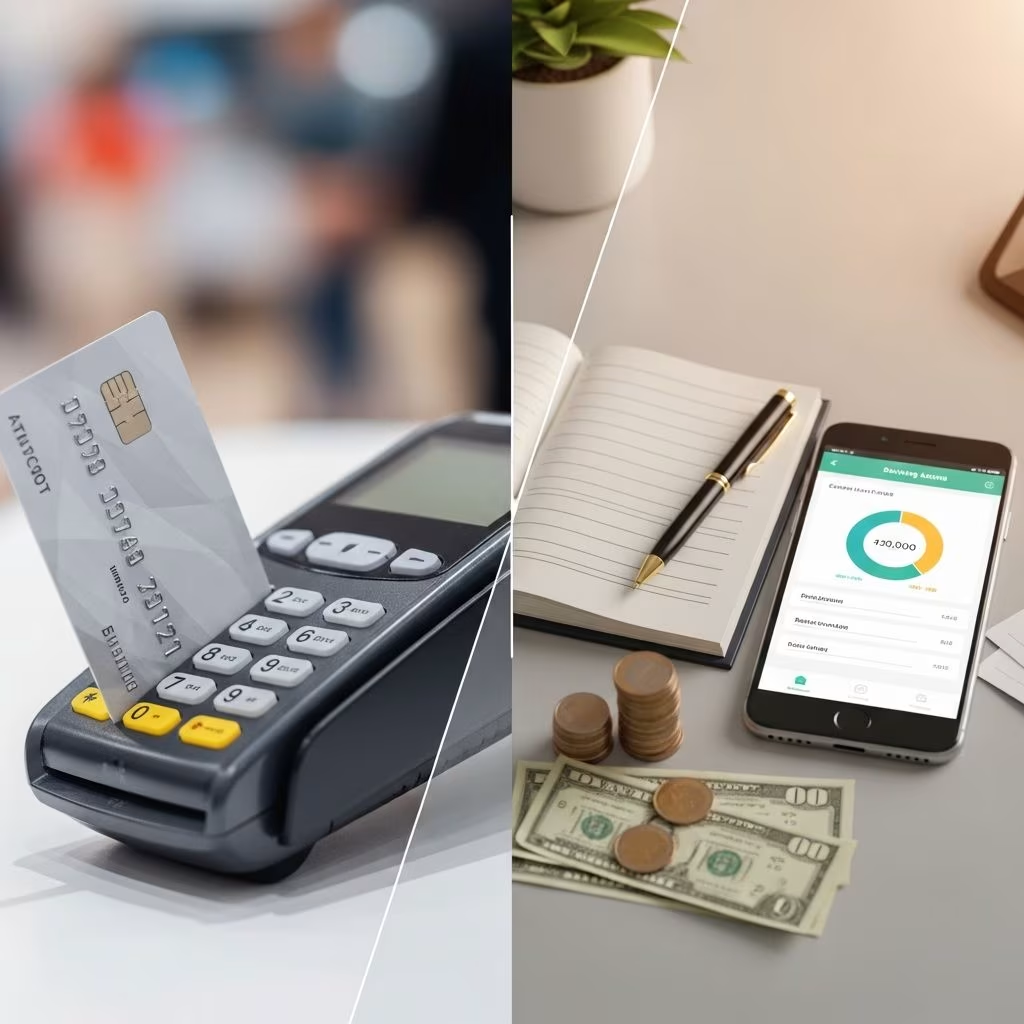
Many people use the terms “debit card” and “checking account” interchangeably, but these are actually two distinct financial tools that work in tandem. A checking account is a deposit account at a bank or credit union that allows you to store money and access it in multiple ways, while a debit card is a payment instrument linked to that account that enables you to make purchases and withdraw cash. Understanding the differences between these two tools is essential for making informed banking decisions and managing your money effectively.
The Relationship Between Checking Accounts and Debit Cards
A checking account serves as the foundation of personal banking. It is a bank account specifically designed for frequent deposits and withdrawals, making it ideal for managing day-to-day finances. When you open a checking account, the financial institution provides you with access to your funds through multiple channels, including in-person visits, online transfers, check writing, and a debit card.
The debit card is one of several tools available to you as a checking account holder. This plastic card is directly connected to your checking account balance and allows you to spend money electronically. Every purchase you make with your debit card is deducted immediately from your account balance. It functions as a digital alternative to writing checks or withdrawing cash, offering convenience for modern consumers.
Key Features of Checking Accounts
Checking accounts offer several fundamental features that make them essential for most consumers:
- Multiple access methods: You can retrieve your money through ATMs, bank tellers, debit cards, online transfers, or by writing checks.
- Deposit flexibility: You can receive direct deposits from employers, government agencies, or other sources, streamlining income management.
- Bill payment capabilities: Most checking accounts allow you to set up automatic bill payments, reducing the risk of missing deadlines.
- Transaction history: Banks maintain detailed records of all deposits and withdrawals, helping you track spending and manage budgets.
- Federal protection: Checking accounts held at FDIC-insured banks or NCUA-insured credit unions provide deposit insurance up to specified limits.
Key Features of Debit Cards
Debit cards provide a convenient payment method with specific characteristics:
- Direct account access: Funds are withdrawn immediately from your linked checking account, ensuring you cannot spend beyond your available balance.
- No credit extension: Unlike credit cards, debit cards do not allow you to borrow money or carry a balance.
- ATM functionality: Most debit cards work at ATMs, allowing you to withdraw cash from affiliated networks often at no charge.
- Online and in-store use: Debit cards are accepted at most merchants that accept card payments, whether online or at physical locations.
- Real-time balance updates: Transaction information appears in your account almost instantly, allowing for immediate account monitoring.
Advantages of Using a Checking Account
Checking accounts provide numerous benefits that make them indispensable for most individuals:
| Advantage | Description |
|---|---|
| Convenient fund access | Access your money through multiple methods including ATMs, checks, online transfers, and debit cards for maximum flexibility. |
| Direct deposit options | Employers can deposit paychecks directly into your account, ensuring reliable and timely income receipt. |
| Automatic bill management | Set up recurring payments for utilities, rent, loans, and other obligations to avoid late fees and payment delays. |
| Financial security | FDIC or NCUA insurance protects your deposits up to legal limits, safeguarding your money against bank failure. |
| Enhanced banking features | Many modern checking accounts offer mobile check deposit, savings tools, early paycheck access, and account alerts. |
| Spending documentation | Maintain a comprehensive record of all transactions for budgeting, tax purposes, and dispute resolution. |
Disadvantages of Checking Accounts
- Minimal or zero interest earnings: Most checking accounts offer little to no annual percentage yield, meaning your money does not grow through interest accrual.
- Potential monthly fees: Many banks charge maintenance fees, overdraft fees, or inactivity charges that can accumulate and reduce your balance.
- Minimum balance requirements: Some institutions require you to maintain a certain balance to avoid fees, which may be challenging for those with limited funds.
- Overdraft risks: If you spend more than your balance, you may face significant overdraft fees unless you have overdraft protection.
- Temptation to overspend: The ease of access to funds can encourage impulsive spending habits and financial mismanagement.
Advantages of Using a Debit Card
| Advantage | Explanation |
|---|---|
| No debt accumulation | Spend only available funds without borrowing, eliminating credit card debt risk and high-interest charges. |
| Built-in spending limits | Your purchasing power is naturally capped at your account balance, providing automatic budget enforcement. |
| No annual fees | Most debit cards are free to obtain and maintain, unlike many credit cards that charge annual fees. |
| Quick cash access | Withdraw cash from ATMs worldwide, with many banks offering free withdrawals at their network locations. |
| Transaction transparency | Real-time balance updates and transaction notifications help you monitor spending and detect fraud quickly. |
| No credit check required | Obtain a debit card automatically with your checking account without undergoing a credit evaluation. |
Disadvantages of Debit Cards
- Limited fraud protection: Debit cards offer weaker fraud protections than credit cards, and stolen funds are withdrawn directly from your account rather than being disputed through a credit issuer.
- Daily spending caps: Banks typically impose daily transaction and withdrawal limits, which can be problematic for large purchases or travel-related expenses.
- Overdraft penalties: If your spending exceeds your balance, you may face substantial overdraft fees that can reach $35 or more per occurrence.
- Authorization holds: Hotels, car rental companies, and gas stations often place temporary holds on funds that exceed the actual purchase amount, reducing your available balance.
- No credit building: Debit card usage does not contribute to your credit history or credit score, limiting your ability to establish creditworthiness.
- Delayed reimbursement: If fraudulent charges occur, reimbursement can take time, leaving you without access to those funds temporarily.
- Limited rewards: While some debit cards offer cashback or loyalty points, these rewards programs are typically less generous than credit card alternatives.
Understanding Daily Spending Limits
One common frustration for debit card users involves daily spending restrictions. Banks impose these limits to prevent fraud and protect accounts from unauthorized use. Typical daily limits range from $300 to $500 for point-of-sale transactions, though ATM withdrawal limits may differ. If you anticipate making a large purchase, contact your bank in advance to request a temporary limit increase. This proactive approach prevents transaction declines and shopping embarrassment.
Fraud Protection Considerations
A significant distinction between checking accounts and debit cards involves fraud protection mechanisms. Credit cards typically offer stronger protections against fraudulent charges, allowing you to dispute unauthorized transactions while the card issuer investigates. Debit card fraud protection is generally weaker—when fraudulent charges occur, funds are removed directly from your checking account, and reimbursement depends on your bank’s review process, which may take several business days or longer. This distinction makes monitoring your accounts and responding quickly to suspected fraud essential.
Choosing Between These Banking Tools
Rather than viewing checking accounts and debit cards as competing options, recognize them as complementary tools in your financial toolkit. Nearly everyone benefits from maintaining a checking account for essential banking functions. The question is not whether to use a checking account, but how to use it most effectively alongside your debit card and other payment methods. Consider maintaining a checking account for essential transactions while using alternative payment methods like credit cards or cash for specific purchases where additional protections or rewards matter most.
Best Practices for Account Management
- Monitor your account balance regularly through online banking or mobile apps to avoid overdrafts.
- Set up account alerts to receive notifications of large transactions or low balances.
- Review your statements monthly to identify unauthorized charges or errors.
- Use automatic bill pay for recurring expenses to avoid late payments and maintain consistent savings discipline.
- Keep your debit card information secure and report lost or stolen cards immediately.
- Consider overdraft protection options offered by your financial institution to prevent expensive overdraft fees.
- Use ATMs within your bank’s network to avoid surcharge fees.
- Maintain sufficient emergency funds in your checking account to cover unexpected expenses.
Comparing Account Types Side-by-Side
| Feature | Checking Account | Debit Card |
|---|---|---|
| Primary Purpose | Day-to-day fund management and storage | Payment and cash withdrawal instrument |
| Interest Earned | Minimal or none | N/A (not applicable) |
| Fee Structure | Often includes monthly maintenance or overdraft fees | Usually free |
| Fraud Protection | Account-level protections via FDIC/NCUA | Limited transaction protection |
| Credit Building | No impact on credit score | No impact on credit score |
| Spending Limits | No transaction limits | Daily transaction and withdrawal caps apply |
| Access Methods | ATM, teller, check, online transfer, debit card | Point-of-sale terminals and ATMs |
Frequently Asked Questions
Is a debit card the same as a checking account?
No. A checking account is a deposit account where you store money, while a debit card is a payment tool linked to that account. The debit card provides one method of accessing and spending funds held in your checking account.
Can I have a debit card without a checking account?
Typically no. Debit cards are issued as part of checking account relationships. Some prepaid debit cards exist independently, but traditional debit cards require an underlying checking account.
Do checking accounts require a minimum balance?
Many banks require minimum balances to avoid monthly fees, though minimum amounts vary. Some institutions offer fee-free accounts with no minimum balance requirements. Always confirm balance requirements when opening an account.
What protections do I have with a debit card?
Debit card fraud protections vary by bank and situation. Federal regulations provide some protections, but coverage is generally less comprehensive than credit card protections. Contact your bank to understand specific protections offered.
Can I build credit with a debit card?
No. Debit card usage does not contribute to credit history or credit scores because you are spending your own money, not borrowing credit. Only credit-based products like credit cards or loans impact credit scores.
References
- Checking Account vs. Debit Card: What’s the Difference? — SoFi Learn. 2024. https://www.sofi.com/learn/content/checking-account-vs-debit-card/
- Why Use a Debit Card? Key Advantages and Disadvantages — Ancoria Bank. 2024. https://www.ancoriabank.com/blog/debit-card-advantages-and-disadvantages/
- Checking Accounts: Advantages & Disadvantages — Capital One. 2024. https://www.capitalone.com/bank/money-management/banking-basics/benefits-of-checking-accounts/
- What Are the Pros and Cons of Debit Cards? — Oklahoma Central Credit Union. 2024. https://www.oklahomacentral.creditunion/blog/what-are-the-pros-and-cons-of-debit-cards
- Pros and Cons of Debit Cards — Texas Tech Federal Credit Union. 2024. https://texastechfcu.org/blog/pros-and-cons-of-debit-cards
This article is general information, not personal financial advice. Consider your own situation, or speak with a licensed adviser, before acting on it.