

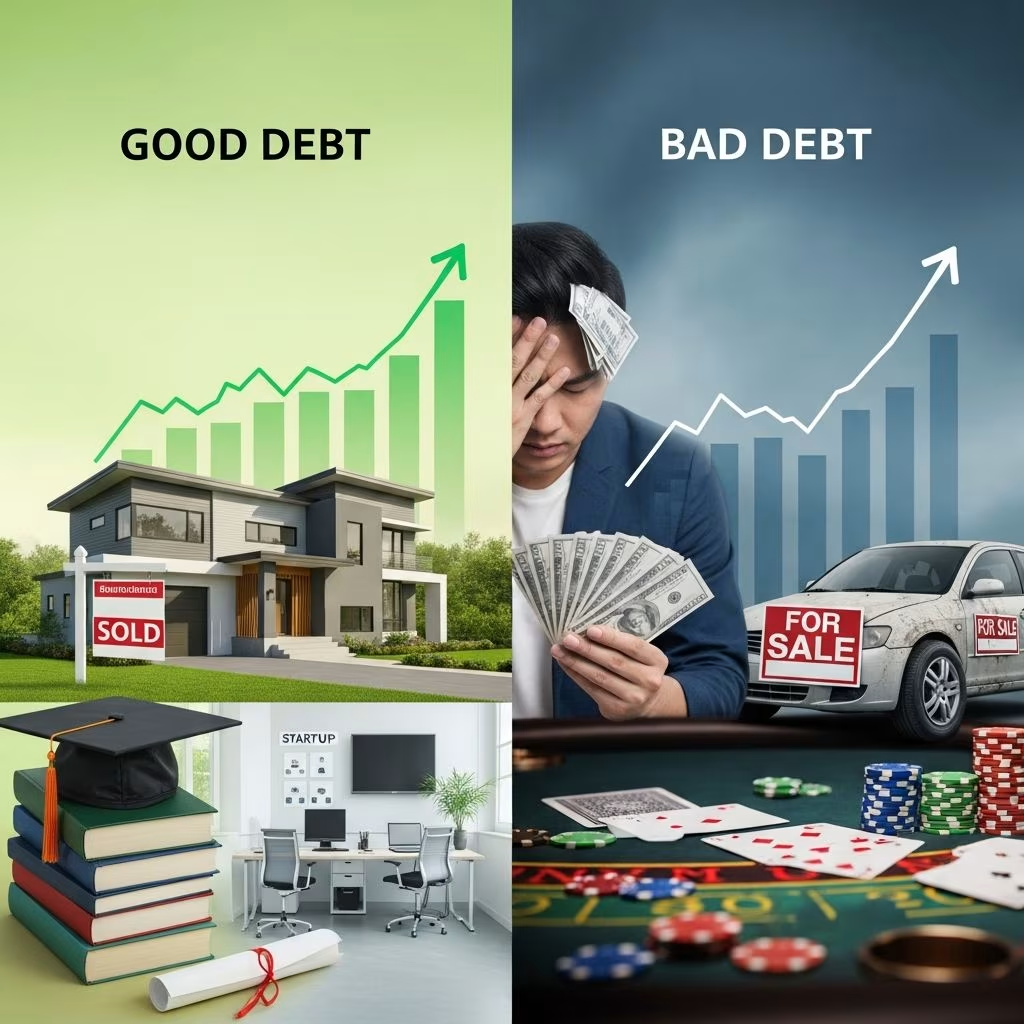
Not all debt is created equal. There are two primary ways to evaluate whether debt is good or bad: the terms of the debt itself (interest rates, repayment periods) and the purpose of the borrowing. Good debt typically involves low-interest loans for assets that appreciate or generate income, while bad debt funds depreciating items or high-interest consumption. Understanding this distinction helps you borrow strategically to build wealth rather than fall into a financial trap.
Debt Terms: Good vs. Bad
The first lens for assessing debt focuses on its structure. Good debt usually features low interest rates, longer repayment terms, and collateral that secures favorable conditions. For instance, mortgages often have rates below 5-7% with 15-30 year terms, making monthly payments manageable while building equity. Bad debt, conversely, carries high rates—credit cards average 20-25% APR—and short terms that pressure cash flow. High-interest debt compounds quickly, turning small balances into overwhelming obligations if only minimum payments are made.
- Low interest rates: Good debt like student loans (often 4-8%) or mortgages allow affordable payments.
- Long repayment periods: Spreads costs over time, reducing immediate burden.
- Secured by assets: Lenders offer better terms when collateral like a home is involved.
- High rates and short terms: Bad debt hallmarks, like payday loans at 400% APR, lead to cycles of borrowing.
Even good-term debt can turn bad if mismanaged, such as missing payments, which harms credit scores and raises future borrowing costs.
Purpose of Debt: Investments vs. Consumption
The second, more critical evaluation is the debt’s purpose. Good debt finances investments that increase net worth or income potential, such as education or business startups. These yield returns exceeding the loan cost over time. Bad debt buys consumables that depreciate immediately, like vacations or gadgets, providing short-term pleasure but long-term regret through interest payments.
| Type | Good Debt Examples | Bad Debt Examples |
|---|---|---|
| Appreciates in Value | Mortgage for home (equity builds, property values rise) | Auto loan for luxury car (depreciates 20% in first year) |
| Generates Income | Business loan (revenue from operations) | Credit card for dining out (no return) |
| Boosts Earning Power | Student loans (higher salary post-graduation) | Personal loan for vacation (fleeting enjoyment) |
Data shows Americans carry $11.92 trillion in mortgages (often good), but $986 billion in credit card debt (typically bad), highlighting consumption pitfalls.
Examples of Good Debt
Good debt acts as leverage for wealth-building. A mortgage enables homeownership, where principal payments and appreciation create equity—homes have historically returned 4-6% annually after inflation. Student loans fund degrees that boost lifetime earnings by $1 million or more for many fields. Business loans fuel growth; successful ventures multiply invested capital.
- Mortgage: Builds equity; tax-deductible interest in many cases.
- Student Loans: Federal rates are low; income-driven repayment plans exist.
- Business Loans: SBA loans at 7-9% support startups with high ROI potential.
These require responsible use: ensure returns exceed costs and maintain payments to preserve credit health.
Examples of Bad Debt
Bad debt erodes wealth. Credit cards fund impulse buys that lose value instantly, with interest compounding at 20%+ eating disposable income. Car loans for vehicles beyond needs depreciate rapidly—new cars lose 60% value in five years. Payday or vacation loans trap borrowers in cycles, as short terms demand full repayment amid high fees.
- Credit Cards: $986 billion owed; minimum payments extend payoff to decades.
- Auto Loans: $1.55 trillion total; financed luxuries hinder savings.
- Consumer Loans: For weddings or gadgets; no asset backing.
High-interest unsecured debt is hardest to escape, damaging credit and limiting good debt access.
Strategies for Using Debt Wisely
Maximize good debt while minimizing bad. Prioritize high-interest payoff using debt snowball or avalanche methods. Build emergency funds to avoid necessity-driven bad debt. Shop rates: compare lenders for mortgages or refinances when rates drop. Use 28/36 rule—housing costs under 28% income, total debt under 36%.
- Assess purpose: Does it build assets? Calculate expected ROI.
- Avoid lifestyle inflation: Match borrowing to verified needs.
- Pay more than minimums: Saves thousands in interest.
- Monitor credit mix: Balance installment (good) and revolving debt.
- Refinance opportunistically: Lower rates on good debt.
Tools like balance transfer cards (0% intro APR) convert bad to manageable debt temporarily.
The Debt Trap: How to Avoid It
Debt traps stem from easy credit access, minimum payments illusion, and unexpected events. Americans owe trillions partly due to normalized borrowing for wants. Trap signs: relying on cards for essentials, balance growth despite payments, stress over bills. Escape by budgeting 50/30/20 (needs/wants/savings), cutting non-essentials, increasing income via side hustles.
Unexpected costs like medical bills create ‘necessary bad debt’—mitigate with 3-6 months’ savings. Responsible good debt users maintain payments, leveraging it for goals like retirement via home equity.
Frequently Asked Questions (FAQs)
Q: What makes debt ‘good’ versus ‘bad’?
A: Good debt builds wealth through appreciating assets or income generation with low rates; bad debt funds depreciating consumption at high interest.
Q: Can good debt become bad?
A: Yes, if payments are missed, rates rise, or purpose shifts (e.g., home equity for luxuries).
Q: How much debt is too much?
A: When it exceeds 36% of income, causes stress, or requires minimum payments only.
Q: Are student loans always good debt?
A: Often, due to earning potential, but bad if degree doesn’t yield ROI or payments strain budget.
Q: How do I improve my debt situation?
A: Pay high-interest first, build savings, refinance, and track spending.
References
- Good debt vs bad debt explained — North American Company. 2023-05-15. https://www.northamericancompany.com/plan-for-tomorrow/good-debt-and-bad-debt-explained
- Good Debt and Bad Debt: A Quick Guide to Wise Use of Borrowing — Boldin. 2024-02-20. https://www.boldin.com/retirement/good-debt-and-bad-debt-quick-guide-to-wise-use-of-borrowing/
- THE GOOD, THE BAD, THE UGLY: THE TYPES OF DEBT — Alia Wealth. 2023-11-10. https://www.aliawealth.com/blog/the-good-the-bad-the-ugly-the-types-of-debt-and-the-key-to-managing-them
- Good debt vs. bad debt: Understanding the difference — Old National Bank. 2024-01-08. https://www.oldnational.com/resources/insights/good-debt-vs-bad-debt-understanding-the-difference/
- Difference Between Good Debt & Bad Debt — Community First Credit Union. 2023-09-12. https://www.communityfirstfl.org/resources/blog/the-difference-between-good-debt-and-bad-debt
This article is general information, not personal financial advice. Consider your own situation, or speak with a licensed adviser, before acting on it.


