

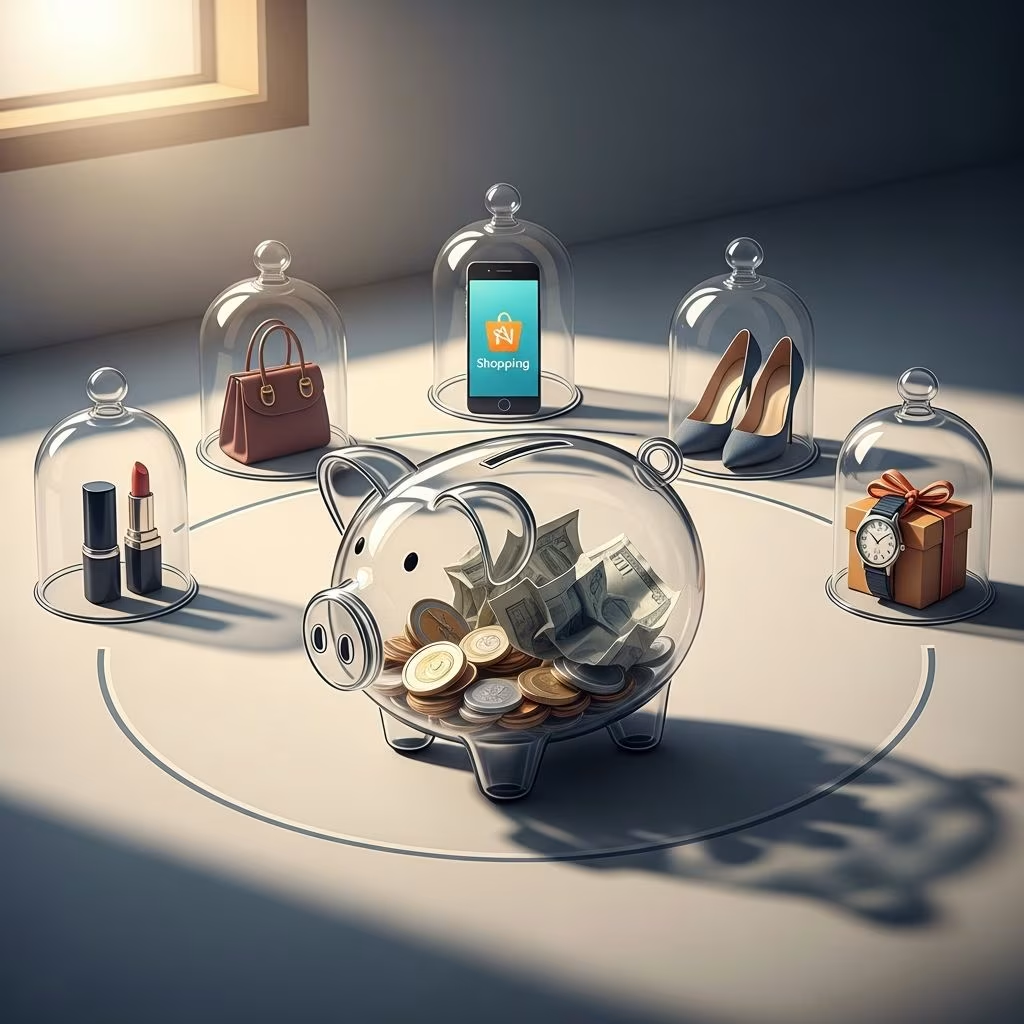
Overspending can quietly drain your bank account and delay your biggest money goals, from building an emergency fund to paying off debt. A well-designed shopping ban is a practical way to reset your habits, gain clarity about your needs vs wants, and quickly free up cash for what matters most.
This guide walks you through what a shopping ban is, the different types you can try, how to set rules that work for your life, and realistic strategies to stick with it without feeling deprived.
What Is A Shopping Ban?
A shopping ban is a set period of time when you intentionally stop buying certain items or categories of non-essential goods so you can save more, spend less, and reassess your habits. Instead of mindlessly adding things to your cart, you commit to buying only essentials you’ve defined in advance.
Key characteristics of a shopping ban include:
- Clear time frame – for example, 30, 90, or 180 days.
- Defined rules – what is allowed, what is off-limits.
- Specific goal – such as saving a set amount, paying off a card, or breaking an impulse-shopping habit.
- Focus on non-essentials – you still pay for core needs like housing, utilities, and basic groceries.
Research on consumer behavior shows that limiting exposure to temptations and interrupting automatic spending patterns can significantly reduce impulsive purchases and improve self-control over time.
Why Consider A Shopping Ban?
If you find yourself scrolling for deals when you are tired, stressed, or bored, you are not alone. Studies indicate that negative moods and stress are often linked to higher impulsive buying, especially online. A shopping ban gives you breathing room to:
- Interrupt emotional spending – break the link between how you feel and what you buy.
- Rebuild financial stability – redirect money to savings, debt payoff, or overdue bills.
- Practice mindful consumption – learn to differentiate needs from wants.
- Use what you already own – clothing, books, beauty products, decor, and more.
Many people find that a temporary restriction leads to long-term habit change, because they become more intentional about every purchase even after the ban ends.
Types Of Shopping Bans You Can Try
A shopping ban is not one-size-fits-all. You can customize it around the specific habits that cause you the most trouble. Below are common approaches you can mix and match.
Online Shopping Ban
If your biggest weakness is tapping “Add to cart” from your phone, an online shopping ban can be especially effective. The goal is to remove frictionless spending and stop casual browsing that leads to impulse buys.
Practical steps include:
- Delete shopping apps from your phone and tablet.
- Remove saved payment information from your favorite online stores, digital wallets, and browsers to add friction before any purchase.
- Unsubscribe from marketing emails and promotional texts that create urgency and fear of missing out.
- Limit non-essential internet use – for example, only going online for work, bills, or email.
Because many online purchases are triggered by convenience and targeted ads, adding small barriers often reduces impulse spending substantially.
Store Shopping Ban
If your weakness is wandering through malls or discount stores “just to look,” a store shopping ban targets in-person browsing.
Ways to implement a store shopping ban:
- Set your time frame – 30 days, 60 days, or longer.
- Avoid malls and shopping centers altogether unless you must pick up a pre-planned essential.
- Change your routes so you are not constantly walking or driving past tempting stores and window displays.
- Use curbside pickup or delivery for essentials to minimize exposure to aisles full of non-essentials.
Retail environments are deliberately designed with music, layouts, and promotions that encourage you to stay longer and spend more, so reducing exposure can dramatically cut unplanned spending.
Specific Item Shopping Ban (e.g., Clothing Ban)
Maybe you are generally careful with money but overspend in one category, like clothes, beauty, or home decor. In that case, a specific item shopping ban can help.
Common categories to target include:
- Clothing and shoes
- Bags and accessories
- Beauty and skincare beyond basic needs
- Home decor and furniture
- Books, games, or hobby supplies you already own plenty of
- Gadgets and tech upgrades you don’t truly need
During this ban, you commit to using what you already have. For example, you might wear everything in your closet at least once before buying anything else, or finish existing products before replacing them.
How To Design Your Shopping Ban Rules
You are more likely to succeed when your ban has simple, specific, and realistic rules. The goal is not punishment, but alignment between your money and your values.
Step 1: Decide On The Rules
Think of your rules as the “game instructions” for your shopping ban. You can write them down in a notebook or in the notes app on your phone. Consider including:
- What you will not buy (e.g., “No clothing, shoes, or handbags”).
- What you are allowed to buy (e.g., “Groceries, medicine, and basic toiletries only”).
- Your time frame (“From March 1 to May 31” or “For 90 days starting next Monday”).
- Your savings or debt goal (“I will save an extra $200 a month” or “All freed-up money goes to my credit card”).
Keep the rules short and clear. Too many rules can be overwhelming and harder to follow consistently.
| Rule | Example |
|---|---|
| Forbidden items | No new clothes, shoes, handbags, or home decor. |
| Allowed essentials | Groceries, prescriptions, basic skincare, and household cleaners. |
| Time frame | Jan 15 – Apr 15 (90 days). |
| Financial goal | Save $1,000 for an emergency fund. |
Step 2: Decide On Your Goal
A shopping ban is easier to stick to when you can point to a clear reason you are doing it. Decide on one main goal, such as:
- Savings goal – e.g., save $500–$1,000 in three months.
- Debt reduction – e.g., pay off a high-interest credit card faster.
- Behavior change – e.g., reduce impulse purchases or emotional shopping.
- Decluttering and minimalism – use up what you own instead of adding more.
Evidence suggests that setting specific, measurable goals increases commitment and follow-through, including for financial behaviors like saving and debt repayment.
Step 3: Identify Your Triggers And Remove Temptation
Most people do not overspend randomly; they overspend in response to triggers. Common triggers include stress, boredom, social media, sales emails, and certain friends or social situations.
To support your ban, try to:
- Put away credit cards and consider using cash or a debit card for essentials only.
- Avoid “just browsing” online or in stores.
- Unfollow or mute accounts that constantly promote new products, hauls, and sales.
- Plan alternative activities for times when you usually shop, such as walks, reading, or free hobbies.
Removing easy access to payment methods and advertising reduces the number of decisions you have to make and helps preserve your willpower.
Smart Strategies To Stick To Your Shopping Ban
Creating rules is the first step; living them day-to-day is where the real work happens. The following strategies make it much easier to stay on track.
1. Make A List When You Shop For Necessities
You will still need essentials such as groceries, medicine, and household items. To avoid slipping into old habits, always shop with a written list and a firm plan.
- Write down everything you truly need before leaving home.
- Review the list and remove anything that feels like a “nice to have” rather than a genuine need.
- Commit to only buying what is on the list, even if you see tempting displays or discounts.
- If you notice something you want, add it to a “wait list” for after the ban instead of buying it immediately.
Using a list has been shown to reduce impulse spending in grocery and retail environments, because it gives you a clear roadmap and reduces spontaneous decisions.
2. Remind Yourself That Shopping Is Not A Necessity
Many of us use shopping as entertainment, a reward, or a coping mechanism. During your ban, it helps to consciously separate true necessities from non-essential extras.
Essentials typically include:
- Rent or mortgage payments
- Utilities and basic phone service
- Groceries and basic household supplies
- Transportation to work or school
- Healthcare and necessary medications
By contrast, items like new clothes when your closet is full, upgraded electronics, decorative items, or luxury skincare are usually wants, not needs. Keeping this distinction in mind helps you stay committed to your financial priorities.
3. Track Your Progress And Celebrate Milestones
Monitoring your results gives you motivation to keep going. You can track:
- Money saved each week or month compared to your previous spending pattern.
- Number of no-spend days you achieve in a row.
- Debts paid down with the extra money.
- Non-financial wins, like using up items you already owned or feeling less pressured to buy.
Consider a visual tracker, such as coloring a box for each no-spend day, or a simple spreadsheet where you log spending and savings. Positive reinforcement, even with small rewards like a relaxing bath or a movie night at home, helps you keep going without breaking the ban.
4. Build A Support System
Behavior change is easier when you are not doing it alone. Share your shopping ban with a trusted friend, partner, or online community and ask them to check in with you.
- Tell someone you trust about your time frame and goals.
- Ask for accountability – for example, texting them before making any unplanned purchase.
- Seek out communities focused on frugality, debt payoff, or minimalism for encouragement and ideas.
Social support has been linked to better outcomes in many kinds of habit change, including financial goals like saving and debt reduction.
What To Do After Your Shopping Ban Ends
The end of your shopping ban is not the end of your progress; it is the start of your next chapter. Before returning to normal spending, reflect on what you learned:
- Which purchases did you truly miss, and which did you not think about at all?
- What triggered your strongest urges to shop?
- How did your bank balance, savings, or debt change?
- Which new habits would you like to keep (lists, fewer apps, less exposure to ads)?
Many people choose to adopt a softer, ongoing version of their shopping ban, such as a monthly “no-spend weekend” or a permanent ban on certain impulse categories.
Frequently Asked Questions (FAQs)
Q: How long should a shopping ban last?
A: Choose a time frame that feels challenging but realistic. Thirty days is a good starting point for your first ban. Once you see the benefits and build confidence, you can extend to 60 or 90 days. Longer bans (six months or more) work best when your rules are flexible and focused on the biggest problem areas rather than all non-essential spending.
Q: What counts as an essential expense during a shopping ban?
A: Essentials usually include housing, utilities, basic groceries, transportation, healthcare, and necessary personal care items. Beyond that, it is up to you. For example, you might allow replacement of worn-out work shoes but not trend-based fashion purchases. The key is to define essentials clearly before the ban begins so you have fewer decisions to make in the moment.
Q: Can I still buy gifts while on a shopping ban?
A: You can, but it helps to set guidelines. You might create a small, pre-set gift budget, choose handmade or low-cost options, or focus on experiences that do not require spending much. Some people include gifts in their ban to reduce pressure and shift toward more thoughtful, less material celebrations.
Q: What if I slip up and make a purchase I said I wouldn’t?
A: One slip does not mean you have failed. Instead of giving up, treat it as data. Ask what triggered the purchase, how you were feeling, and what you can change to avoid similar situations. You can extend the ban by a few days, return the item if possible, or recommit to your rules starting with your very next purchase.
Q: Will a shopping ban hurt my quality of life?
A: When done thoughtfully, a shopping ban often improves quality of life. Many people report feeling less financial stress, more gratitude for what they already own, and more time for activities that do not involve spending. The key is to replace shopping with fulfilling alternatives—like hobbies, learning, exercise, or time with loved ones—so you are not relying on new purchases for entertainment or self-worth.
References
- Consumer Behavior and Purchase Decisions — U.S. Federal Trade Commission. 2023-05-18. https://www.ftc.gov/business-guidance/small-businesses/advertising-and-marketing/advertising-facts
- Impulsive Buying: A Literature Overview — Akram, U. et al., Frontiers in Psychology. 2018-10-09. https://www.frontiersin.org/articles/10.3389/fpsyg.2018.01505
- Household Saving Behavior and Financial Literacy — Lusardi, A. & Mitchell, O.S., National Bureau of Economic Research. 2014-01-01. https://www.nber.org/papers/w18855
- Retail Store Environment and Consumer Purchase Behavior — Turley, L.W. & Milliman, R.E., Journal of Business Research. 2000-01-01. https://doi.org/10.1016/S0148-2963(98)00062-7
- Motivating Savings: A Field Experiment — Karlan, D. et al., National Bureau of Economic Research. 2010-06-01. https://www.nber.org/papers/w16420
This article is general information, not personal financial advice. Consider your own situation, or speak with a licensed adviser, before acting on it.


